
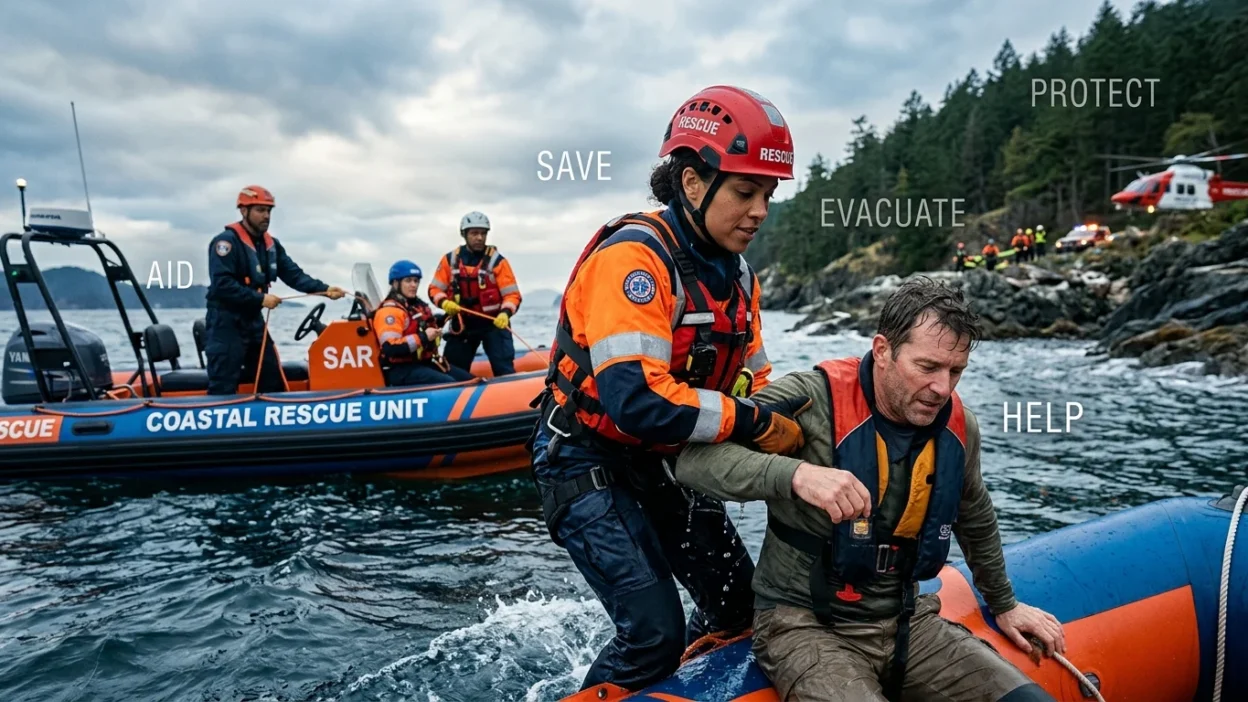
Finding the right word can make your writing clearer, stronger, and more natural. The word rescue is common in English, but it does not always express exactly what you mean. Depending on the situation, you may want a word that emphasizes helping, saving, freeing, protecting, or recovering someone or something.
Learning the synonyms of rescue can help students, ESL learners, writers, and content creators choose words that match the exact meaning and tone they want. For example, save is a general alternative to rescue, while evacuate is better when people are moved away from danger.
This guide explains 30 useful alternatives to rescue in simple English. Each word includes its meaning, an example sentence, and the situation where it works best.
What Does “Rescue” Mean?
Rescue means to save someone or something from danger, harm, difficulty, or an unpleasant situation.
For example:
The firefighters rescued the family from the burning house.
The word can be used as both a verb and a noun.
- Verb: The lifeguard rescued the swimmer.
- Noun: The mountain rescue took several hours.
The tone of rescue is usually helpful, urgent, and positive. It is often used when someone is in danger and another person or group takes action to help.
30 Synonyms of Rescue
1. Save
Meaning: To protect someone or something from danger, harm, or loss.
Example sentence: The doctor saved the patient’s life.
Best usage context: Use save as the most common and general alternative to rescue.
2. Aid
Meaning: To help someone who needs support.
Example sentence: Volunteers arrived to aid people affected by the flood.
Best usage context: Best for formal, humanitarian, medical, or emergency situations.
3. Help
Meaning: To give someone support or assistance.
Example sentence: The neighbors helped the family escape the damaged building.
Best usage context: Use help in everyday English when the situation is not necessarily dramatic.
4. Assist
Meaning: To help someone complete something or deal with a problem.
Example sentence: Police officers assisted the passengers after the accident.
Best usage context: Useful in formal, professional, and official writing.
5. Protect
Meaning: To keep someone or something safe from harm.
Example sentence: The soldiers protected the villagers from the attack.
Best usage context: Best when the main idea is preventing harm rather than removing someone from immediate danger.
6. Defend
Meaning: To protect someone or something against an attack or threat.
Example sentence: The lawyer defended the victim against false accusations.
Best usage context: Use defend for attacks, criticism, enemies, or legal situations.
7. Free
Meaning: To release someone from captivity, control, or confinement.
Example sentence: The police freed the hostages from the building.
Best usage context: Best when someone is trapped, imprisoned, restricted, or controlled.
8. Liberate
Meaning: To free someone from control, oppression, or imprisonment.
Example sentence: The army helped liberate the city from enemy control.
Best usage context: A strong and formal word often used in historical, political, or military contexts.
9. Extricate
Meaning: To carefully remove someone or something from a difficult or dangerous situation.
Example sentence: Firefighters extricated the driver from the damaged vehicle.
Best usage context: Excellent for technical, formal, or physically difficult rescue situations.
10. Evacuate
Meaning: To move people away from a dangerous place to a safer location.
Example sentence: Officials evacuated residents before the storm arrived.
Best usage context: Use evacuate for fires, floods, storms, wars, chemical accidents, and other large scale dangers.
11. Deliver
Meaning: To save or release someone from danger, difficulty, or suffering.
Example sentence: The team delivered the hikers from the dangerous mountain area.
Best usage context: More formal or literary; often appears in phrases such as deliver from danger.
12. Recover
Meaning: To find, retrieve, or regain someone or something that was lost or missing.
Example sentence: Search teams recovered the missing child safely.
Best usage context: Best when the focus is finding or bringing back someone or something that was lost.
13. Retrieve
Meaning: To bring back something or someone from a particular place.
Example sentence: The rescue team retrieved the equipment from the flooded area.
Best usage context: Common for objects, information, animals, or people that need to be brought back.
14. Salvage
Meaning: To save something from damage, destruction, or loss.
Example sentence: Workers salvaged valuable equipment from the damaged ship.
Best usage context: Mainly used for property, materials, vehicles, ships, buildings, and other things rather than people.
15. Recover
Meaning: To regain possession of something or bring someone back from a difficult situation.
Example sentence: The team recovered several survivors after the earthquake.
Best usage context: Useful for missing people, lost objects, and situations involving restoration or retrieval.
16. Reclaim
Meaning: To take back something that was lost, stolen, or taken away.
Example sentence: The community worked together to reclaim the land after the flood.
Best usage context: Best when something is being taken back after loss, separation, or control by others.
17. Support
Meaning: To provide help, encouragement, or resources.
Example sentence: Local organizations supported families after the disaster.
Best usage context: Good for long term assistance rather than an immediate physical rescue.
18. Shelter
Meaning: To provide a safe place or protection from danger or bad conditions.
Example sentence: The charity sheltered families who had lost their homes.
Best usage context: Useful for disasters, homelessness, war, storms, and other situations where people need safety.
19. Accommodate
Meaning: To provide a suitable place or arrangement for someone.
Example sentence: The hotel accommodated families who were evacuated from the area.
Best usage context: More appropriate when helping people find a safe or suitable place to stay.
20. Succor
Meaning: To give urgent help or support to someone in difficulty.
Example sentence: The organization provided succor to victims of the disaster.
Best usage context: A formal and uncommon word, useful in literary or highly formal writing.
21. Relieve
Meaning: To reduce someone’s pain, difficulty, stress, or suffering.
Example sentence: Emergency supplies helped relieve the suffering of displaced families.
Best usage context: Use when the goal is to reduce suffering rather than physically remove someone from danger.
22. Aid
Meaning: To provide practical assistance to someone in need.
Example sentence: Medical workers aided injured passengers after the crash.
Best usage context: Common in news reports, humanitarian writing, and emergency situations.
23. Resuscitate
Meaning: To help a person start breathing or regain vital functions after a medical emergency.
Example sentence: The paramedics resuscitated the unconscious man.
Best usage context: A medical term used for serious emergencies involving breathing or cardiac problems.
24. Rehabilitate
Meaning: To help someone or something recover and return to a healthy or useful condition.
Example sentence: The center rehabilitates injured wildlife before releasing the animals.
Best usage context: Best for recovery after injury, illness, addiction, damage, or difficult circumstances.
25. Nurse
Meaning: To care for someone or something until it becomes stronger or healthier.
Example sentence: The volunteers nursed the injured bird back to health.
Best usage context: Often used for injured animals, sick people, or something recovering gradually.
26. Mend
Meaning: To repair something damaged or restore it to a better condition.
Example sentence: The workers mended the damaged boat after the storm.
Best usage context: Better for objects and situations than for direct physical rescue.
27. Prevent
Meaning: To stop something harmful or dangerous from happening.
Example sentence: Quick action prevented the accident from becoming worse.
Best usage context: Use when someone stops danger before a rescue becomes necessary.
28. Intervene
Meaning: To become involved in a situation to stop a problem or protect someone.
Example sentence: A teacher intervened when the student was being bullied.
Best usage context: Useful when someone steps into a dangerous, harmful, or difficult situation.
29. Shield
Meaning: To protect someone or something from danger, criticism, or harm.
Example sentence: The parent shielded the child from the falling debris.
Best usage context: Strong choice when protection is the main idea.
30. Preserve
Meaning: To protect something from damage, destruction, or loss.
Example sentence: The conservation team worked to preserve the historic building.
Best usage context: Best for protecting valuable things, places, traditions, resources, or natural environments.
Quick Comparison of Synonyms of Rescue
| Synonym | Main Idea | Best Context | Tone |
| Save | Keep safe from harm | General situations | Neutral |
| Help | Give support | Everyday situations | Casual |
| Aid | Provide assistance | Emergencies and formal writing | Formal |
| Assist | Give practical help | Professional situations | Formal |
| Protect | Keep safe | Threats and danger | Neutral |
| Free | Release from confinement | Captivity or restriction | Strong |
| Liberate | Free from control | Political or historical situations | Formal |
| Extricate | Remove from difficulty | Physical or complicated situations | Formal |
| Evacuate | Move to safety | Disasters and emergencies | Formal |
| Recover | Find or bring back | Missing people or things | Neutral |
| Retrieve | Bring back | Objects, people, or animals | Neutral |
| Salvage | Save from destruction | Property and materials | Formal |
| Shelter | Provide safety | Disasters and homelessness | Neutral |
| Relieve | Reduce suffering | Pain and hardship | Neutral |
| Intervene | Step in to stop harm | Conflict or danger | Formal |
| Shield | Protect from harm | Physical or emotional danger | Strong |
| Resuscitate | Restore vital functions | Medical emergencies | Medical |
Rescue vs. Save
Rescue and save are very close in meaning, but they are not always interchangeable.
Rescue usually suggests taking someone away from immediate danger.
Firefighters rescued the child from the burning building.
Save has a wider meaning. It can refer to protecting someone from death, failure, loss, or other problems.
The doctor saved his life.
So, rescue often describes an active escape from danger, while save can describe a much wider range of situations.
Rescue vs. Help
Help is broader and less dramatic than rescue.
My friend helped me with my homework.
You would not normally say:
My friend rescued me with my homework.
However, if your friend helped you escape a dangerous situation, rescue would be appropriate.
My friend rescued me from the burning car.
Rescue vs. Evacuate
These words are particularly useful in emergency writing.
Rescue means saving someone from danger.
Evacuate means moving people away from a dangerous area.
For example:
Firefighters rescued three people from the building.
Officials evacuated hundreds of residents before the hurricane.
The first sentence focuses on saving people. The second focuses on moving people to safety.
Rescue vs. Protect
These words describe different stages of dealing with danger.
Protect means preventing harm.
Rescue usually means taking action after someone is already in danger.
For example:
The helmet protected the cyclist from serious injury.
The emergency team rescued the cyclist after the accident.
How to Choose the Right Synonym
Choosing the best synonym depends on what happened, who needs help, and what kind of action was taken.
For General Help
Use:
- Help
- Aid
- Assist
- Support
These words work well when someone needs assistance but is not necessarily in immediate danger.
For Immediate Danger
Use:
- Save
- Rescue
- Extricate
- Evacuate
- Deliver
These words are stronger and more suitable for emergencies.
For Protection
Use:
- Protect
- Defend
- Shield
- Preserve
Choose these words when the main purpose is keeping someone or something safe.
For Freedom
Use:
- Free
- Liberate
- Reclaim
These are useful when someone is trapped, controlled, imprisoned, or separated from something that belongs to them.
For Missing People or Objects
Use:
- Recover
- Retrieve
- Reclaim
These words emphasize finding or bringing something or someone back.
For Medical Situations
Use:
- Resuscitate
- Nurse
- Rehabilitate
- Relieve
These words are more precise when discussing health, injury, treatment, or recovery.
For Disasters
Use:
- Rescue
- Evacuate
- Shelter
- Aid
- Support
These words are especially useful for writing about earthquakes, floods, fires, storms, wars, and humanitarian emergencies.
Why Learning Synonyms of Rescue Matters
Learning alternatives to rescue does more than increase your vocabulary. It helps you express ideas more precisely.
For example, saying that firefighters helped someone is understandable, but saying they extricated someone from a damaged vehicle gives the reader a much clearer picture.
Similarly, saying that authorities moved residents to safety can be replaced with the more precise word evacuated.
For ESL learners, understanding these differences is especially useful because English synonyms often have similar basic meanings but different contexts, tones, and levels of formality.
Common Mistakes When Using Rescue Synonyms
Using “Evacuate” for Every Rescue
Evacuation and rescue are not identical.
If people are moved away from a dangerous area before they are trapped, evacuate is usually the better word.
Using “Salvage” for People
Salvage normally refers to things that can be recovered from damage.
Workers salvaged furniture from the damaged house.
For people, use words such as rescue, save, or recover depending on the situation.
Using “Liberate” in Everyday Situations
Liberate is a strong and formal word.
Instead of:
I liberated my friend from a boring meeting.
In ordinary conversation, you would probably say:
I helped my friend leave the meeting.
Assuming Every Synonym Has the Same Tone
Words can have similar meanings but very different levels of formality.
Help is common and conversational.
Assist sounds more professional.
Succor is highly formal and uncommon.
Choosing the right tone makes your writing sound more natural.
Final Takeaway
The word rescue is powerful and useful, but English gives you many alternatives for expressing more specific ideas. Save is the most general synonym, while evacuate focuses on moving people away from danger. Extricate describes removing someone from a difficult situation, liberate emphasizes freedom, and protect focuses on preventing harm.
For everyday writing, words such as help, save, aid, assist, and support are easy and natural choices. For formal, technical, or specialized writing, words such as extricate, evacuate, resuscitate, rehabilitate, and intervene can provide greater precision.
The best synonym is not simply the word that looks most similar to rescue. It is the word that accurately matches the action, situation, tone, and intended meaning. Learning these distinctions will help you write more clearly and confidently while expanding your English vocabulary.

Ethan Cross is a language enthusiast and content writer who creates practical vocabulary guides. He enjoys helping readers improve communication through clear explanations, engaging examples, and easy-to-understand educational resources.