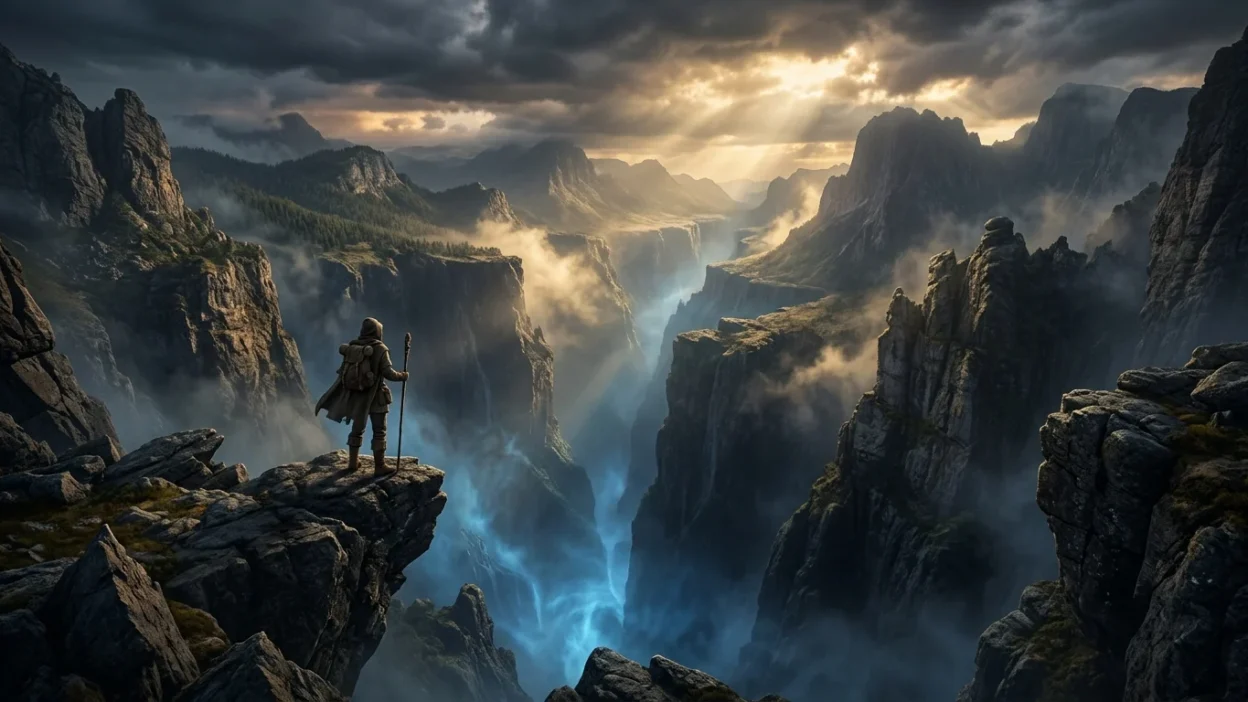
The phrase “synonyms for abyss” is useful when you want to describe something very deep, dark, endless, or frightening without repeating the same word again and again. The word abyss often suggests a huge hole, a bottomless space, or a situation that feels scary, hopeless, or unknown.
Writers, students, and ESL learners often search for synonyms for abyss because the word appears in both literal and figurative writing. In a story, it may describe a deep cliff or ocean. In emotional writing, it may describe loneliness, fear, or complete emptiness. Learning different words helps you write with more power and choose the right tone.
In simple English, abyss means a very deep and seemingly endless space or state. It can describe a real place, like a deep pit, or an abstract feeling, like despair or mystery. The best synonym depends on whether you want a scientific, literary, dramatic, or easy everyday style.
30 Synonyms for Abyss
1. Chasm
Meaning: A very deep crack or opening in the ground.
Example sentence: The hikers stopped near the chasm and looked down carefully.
Best usage context: Use this when talking about a real gap in land or a dramatic division between people or ideas.
2. Pit
Meaning: A deep hole in the ground.
Example sentence: The old mine had a dark pit at its center.
Best usage context: Best for simple, direct writing about holes, danger, or deep empty spaces.
3. Void
Meaning: A complete emptiness with nothing inside.
Example sentence: After the loss, she felt a strange void inside her.
Best usage context: Use this for emotional emptiness or a space that feels completely empty.
4. Gulf
Meaning: A very large gap or separation.
Example sentence: There is still a gulf between their opinions.
Best usage context: Good for figurative writing about distance, difference, or separation.
5. Depths
Meaning: The deepest part of something.
Example sentence: The ship sank into the depths of the sea.
Best usage context: Use this in formal, poetic, or ocean related writing.
6. Precipice
Meaning: A very steep edge of a cliff or dangerous drop.
Example sentence: He stood on the precipice and felt the wind below him.
Best usage context: Best when the abyss feels dangerous, steep, or close to a fall.
7. Ravine
Meaning: A deep, narrow valley with steep sides.
Example sentence: Water ran through the ravine after the storm.
Best usage context: Use this for natural landscapes and geographical descriptions.
8. Gorge
Meaning: A deep valley with high rocky sides.
Example sentence: The river cut through the gorge for miles.
Best usage context: Good for nature writing and travel descriptions.
9. Crevasse
Meaning: A deep crack, especially in ice or rock.
Example sentence: The climber carefully avoided the crevasse in the glacier.
Best usage context: Use this for icy, mountain, or extreme outdoor scenes.
10. Sinkhole
Meaning: A hole in the ground that appears when land collapses.
Example sentence: A sinkhole suddenly opened in the road.
Best usage context: Best for real world land collapse, danger, or news style writing.
11. Hollow
Meaning: An empty space inside something.
Example sentence: The tree trunk was hollow and full of insects.
Best usage context: Use this for an empty interior space or a feeling of emptiness.
12. Expanse
Meaning: A wide open area that seems to go on and on.
Example sentence: They stared at the vast expanse of the desert.
Best usage context: Use this when the abyss feels wide, open, and endless.
13. Bottomless pit
Meaning: A hole or space that seems to have no end.
Example sentence: The cave looked like a bottomless pit in the dark.
Best usage context: Excellent for dramatic writing, stories, and strong visual descriptions.
14. Fathomless depth
Meaning: A depth so great that it cannot be measured easily.
Example sentence: The ocean held a fathomless depth beneath the waves.
Best usage context: Use this in poetic or literary writing.
15. Darkness
Meaning: The absence of light; also a symbol of fear or unknown danger.
Example sentence: He stepped into the darkness and could see nothing.
Best usage context: Good for emotional, spooky, or symbolic writing.
16. Blackness
Meaning: Complete black color or total darkness.
Example sentence: She looked into the blackness below the bridge.
Best usage context: Use this when you want a stronger visual image than “darkness.”
17. Nothingness
Meaning: A state where nothing seems to exist.
Example sentence: In the nightmare, he fell into nothingness.
Best usage context: Best for philosophical, dreamy, or emotional writing.
18. Emptiness
Meaning: A feeling or state of having nothing inside.
Example sentence: The room had a cold emptiness after everyone left.
Best usage context: Use this for emotional loss, silence, or empty places.
19. Chasmic void
Meaning: A very deep empty gap.
Example sentence: The canyon felt like a chasmic void beneath her feet.
Best usage context: Strong poetic or dramatic writing. It sounds more literary than everyday.
20. Netherworld
Meaning: An imagined world below the earth or a world of the dead.
Example sentence: The legend said the cave led to the netherworld.
Best usage context: Best for myths, fantasy stories, and supernatural settings.
21. Underworld
Meaning: A world below the surface; sometimes the realm of the dead.
Example sentence: Ancient stories often describe the underworld as dark and silent.
Best usage context: Good for mythology, fantasy, and symbolic writing.
22. Deeps
Meaning: The deep parts of the sea, mind, or emotion.
Example sentence: The deeps of the ocean remain hard to explore.
Best usage context: Use this in literary and ocean related language.
23. Abyssal depths
Meaning: Extremely deep areas, especially in the ocean.
Example sentence: Scientists studied the abyssal depths near the trench.
Best usage context: Best for science, ocean writing, and formal descriptions.
24. Trench
Meaning: A long, deep ditch or cut in the ground; also a deep ocean floor area.
Example sentence: The ocean trench was deeper than they imagined.
Best usage context: Use this in geography, science, or military contexts.
25. Chasm of despair
Meaning: A deep feeling of hopelessness or sadness.
Example sentence: After the bad news, he fell into a chasm of despair.
Best usage context: Strong emotional and literary writing.
26. Great divide
Meaning: A large separation between two people, ideas, or groups.
Example sentence: The debate revealed a great divide between the two teams.
Best usage context: Best for figurative language, politics, and social writing.
27. Wasteland
Meaning: A barren, empty, lifeless place.
Example sentence: The broken city looked like a wasteland after the storm.
Best usage context: Good for post apocalyptic, fantasy, or bleak descriptions.
28. Desolation
Meaning: A feeling or place of complete sadness, emptiness, or ruin.
Example sentence: The village was full of desolation after the fire.
Best usage context: Use this for emotional emptiness or ruined places.
29. Chasm of grief
Meaning: A deep emotional pain caused by loss.
Example sentence: She spoke about the chasm of grief she felt after the funeral.
Best usage context: Best for serious emotional writing, poems, and reflective text.
30. Infinite darkness
Meaning: Darkness that seems never to end.
Example sentence: The tunnel opened into infinite darkness.
Best usage context: Use this for dramatic fiction, horror, or highly expressive writing.
Comparison Guide: Which Synonym Should You Use?
| Synonym | Best for | Tone |
| Chasm | Real deep crack or gap | Clear, strong |
| Pit | Simple deep hole | Direct, everyday |
| Void | Emptiness inside or outside | Emotional, abstract |
| Gulf | Large gap or separation | Figurative, formal |
| Depths | Deep sea or deep place | Literary, elegant |
| Precipice | Dangerous cliff edge | Dramatic |
| Ravine | Natural land feature | Descriptive |
| Sinkhole | Ground collapse | Real world, factual |
| Bottomless pit | Endless deep hole | Dramatic, visual |
| Nothingness | Complete absence | Philosophical |
This guide shows that not every synonym works in every sentence. Some words describe a real place, while others describe a feeling or an idea. Choosing the wrong one can make your writing sound unnatural.
How to Choose the Right Synonym
1. Choose by meaning
Ask yourself: are you describing a physical place or an emotion?
- For a real hole or land feature: pit, chasm, ravine, gorge, sinkhole
- For feelings of emptiness: void, emptiness, nothingness, desolation
- For dramatic or literary writing: depths, bottomless pit, abyssal depths, infinite darkness
2. Choose by tone
Every synonym creates a different mood.
- Simple and clear: pit, hole, void
- Dramatic and strong: chasm, precipice, bottomless pit
- Poetic and literary: depths, fathomless depth, nothingness
- Scientific or formal: abyssal depths, trench
3. Choose by context
The same word can feel right in one sentence and wrong in another.
- In a science article, abyssal depths sounds natural.
- In a novel, darkness or bottomless pit may feel more powerful.
- In everyday speech, pit or void is easier to understand.
4. Choose by audience
For ESL learners and beginner readers, simple words are often better.
- Use pit instead of chasmic void
- Use empty or void instead of nothingness
- Use darkness instead of infinite darkness if you want a softer style
Quick Writing Tips for Using Synonyms for Abyss
If you want your writing to sound natural, do not replace abyss with a random word. First think about the exact feeling you want to create.
For example:
- A deep hole needs a word like pit or chasm
- A sad emotion may fit void or desolation
- A mysterious scene may work better with darkness or bottomless pit
Good synonym choice makes your writing clearer, stronger, and more interesting.
Conclusion
The best synonyms for abyss depend on the meaning, tone, and context of your sentence. Some words describe real deep places, while others describe emptiness, fear, sadness, or mystery. That is why words like chasm, pit, void, depths, darkness, and bottomless pit all matter in different situations.
If you are a student, ESL learner, writer, or content creator, learning these alternatives will help you write with more confidence and variety. The more you understand the feeling behind each word, the easier it becomes to choose the right one.

Ethan Cross is a language enthusiast and content writer who creates practical vocabulary guides. He enjoys helping readers improve communication through clear explanations, engaging examples, and easy-to-understand educational resources.