
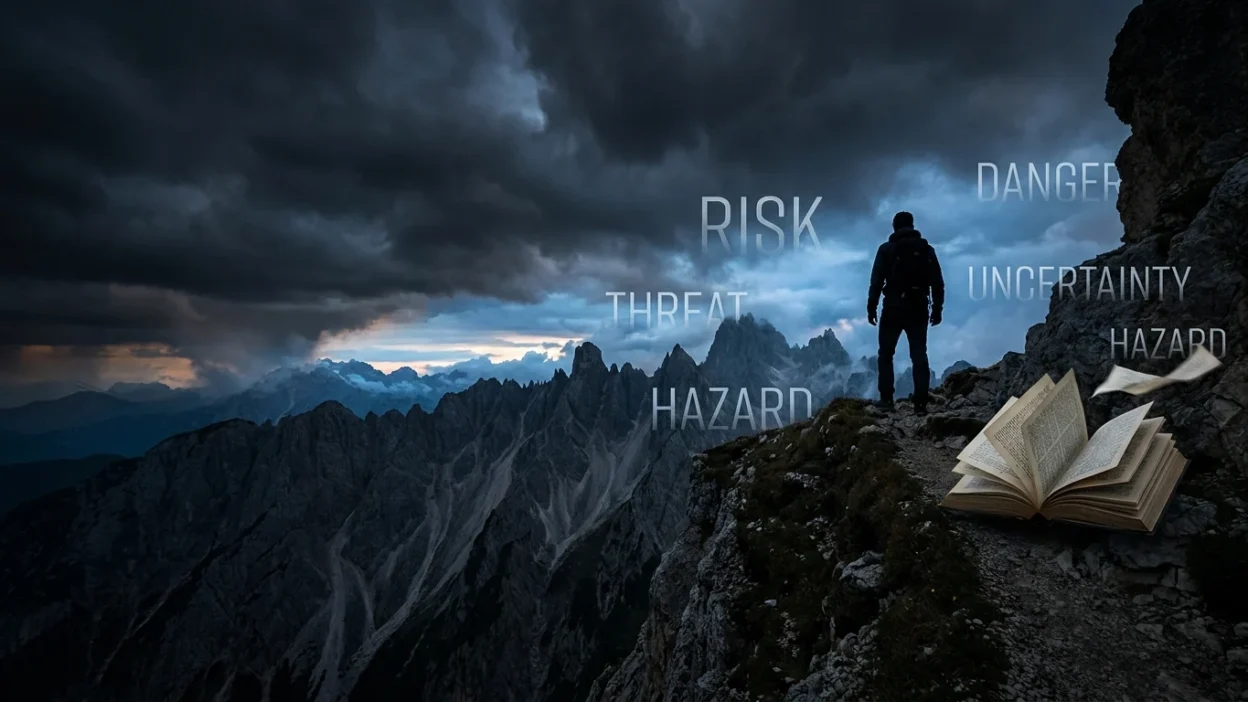
When you want to talk about danger, risk, or a threatening situation, the word peril is a strong choice. However, English has many other words that can express similar ideas. Learning the synonyms of peril can help you make your writing more accurate, natural, and interesting.
The word peril usually describes a situation in which someone or something is exposed to serious danger. It often has a serious, dramatic, or slightly formal tone. For example, “The hikers were in peril during the storm” means the hikers were in a dangerous situation.
Different synonyms carry different levels of seriousness. Some words, such as danger and hazard, are common in everyday English. Others, such as jeopardy, menace, and predicament, are more specific or formal. Understanding these differences will help you choose the right word for each situation.
What Does Peril Mean?
Peril means serious or immediate danger. It can describe a threat to a person, place, object, plan, or situation.
Tone: Serious, formal, dramatic, or literary.
Example:
“The sailors were in great peril after their boat lost its engine.”
In simple English, peril means being in a situation where something bad or dangerous may happen.
30 Synonyms of Peril
1. Danger
Meaning: A situation or condition that could cause harm, injury, or loss.
Example sentence:
“Walking across the frozen lake was extremely dangerous.”
Best usage context:
Use danger for everyday conversations and general writing.
2. Risk
Meaning: The possibility that something bad or harmful may happen.
Example sentence:
“There is a risk of injury if you do not wear protective equipment.”
Best usage context:
Use risk when talking about possibility or uncertainty.
3. Hazard
Meaning: Something that can cause harm or create danger.
Example sentence:
“Wet floors can be a serious hazard for visitors.”
Best usage context:
Common in safety, workplace, health, and environmental contexts.
4. Jeopardy
Meaning: A situation in which someone or something is exposed to danger or possible loss.
Example sentence:
“The team’s future was in jeopardy after several financial problems.”
Best usage context:
Use it in formal or serious writing.
5. Threat
Meaning: A person, situation, or thing that may cause harm or damage.
Example sentence:
“The growing storm was a threat to nearby communities.”
Best usage context:
Useful for physical, social, political, and security related situations.
6. Menace
Meaning: Something or someone that creates danger or fear.
Example sentence:
“The aggressive dog became a menace to the neighborhood.”
Best usage context:
Use when a person, animal, or force actively seems dangerous.
7. Exposure
Meaning: The state of being unprotected or open to something harmful.
Example sentence:
“Long exposure to extreme heat can damage the body.”
Best usage context:
Useful for health, weather, chemicals, and other external dangers.
8. Vulnerability
Meaning: The condition of being easily harmed, attacked, or affected.
Example sentence:
“The old building showed its vulnerability during the earthquake.”
Best usage context:
Best for people, systems, buildings, and organizations that lack protection.
9. Insecurity
Meaning: A lack of safety, protection, or certainty.
Example sentence:
“Political insecurity made businesses hesitant to invest.”
Best usage context:
Useful for social, financial, political, and personal situations.
10. Trouble
Meaning: A difficult, harmful, or problematic situation.
Example sentence:
“The travelers found themselves in trouble after getting lost.”
Best usage context:
Best for informal and everyday English.
11. Crisis
Meaning: A serious situation that requires immediate attention or action.
Example sentence:
“The company faced a financial crisis.”
Best usage context:
Use for major problems affecting people, businesses, governments, or communities.
12. Emergency
Meaning: A sudden serious situation that requires immediate action.
Example sentence:
“The hospital declared an emergency after the accident.”
Best usage context:
Use when quick action is necessary to prevent harm.
13. Predicament
Meaning: A difficult or unpleasant situation that is hard to escape.
Example sentence:
“Losing his passport left him in a difficult predicament.”
Best usage context:
Good for difficult circumstances rather than direct physical danger.
14. Adversity
Meaning: A difficult or challenging situation.
Example sentence:
“She remained positive despite years of adversity.”
Best usage context:
Use for long term struggles, hardship, and difficult experiences.
15. Misfortune
Meaning: Bad luck or an unfortunate event.
Example sentence:
“After several misfortunes, the family decided to move.”
Best usage context:
Useful when bad circumstances happen unexpectedly.
16. Harm
Meaning: Physical, emotional, or other damage caused to someone or something.
Example sentence:
“The medicine was tested carefully to prevent harm.”
Best usage context:
Use when focusing on the damage rather than the dangerous situation itself.
17. Unsafe Condition
Meaning: A condition that may cause injury, damage, or other problems.
Example sentence:
“The workers reported an unsafe condition in the factory.”
Best usage context:
Useful in workplace, construction, transportation, and safety writing.
18. Uncertainty
Meaning: A lack of knowledge about what may happen.
Example sentence:
“The sudden change created uncertainty about the project’s future.”
Best usage context:
Best when the danger comes from an unknown or unpredictable outcome.
19. Pitfall
Meaning: A hidden problem or difficulty that can cause failure.
Example sentence:
“Poor planning is a common pitfall for new businesses.”
Best usage context:
Use for mistakes, plans, careers, business, and decision making.
20. Snare
Meaning: A trap or situation designed to catch or harm someone.
Example sentence:
“The dishonest offer was a snare for inexperienced investors.”
Best usage context:
Often used figuratively or in literary writing.
21. Impending Danger
Meaning: Danger that is likely to happen very soon.
Example sentence:
“The warning signs suggested impending danger.”
Best usage context:
Use when danger is approaching or expected shortly.
22. Imminent Threat
Meaning: A threat that is about to happen.
Example sentence:
“The residents were evacuated because of an imminent threat.”
Best usage context:
Good for serious, urgent, and formal situations.
23. Distress
Meaning: A state of great difficulty, suffering, or anxiety.
Example sentence:
“The stranded passengers sent a distress signal.”
Best usage context:
Use when someone is suffering or needs urgent help.
24. Calamity
Meaning: A major event that causes serious damage, suffering, or loss.
Example sentence:
“The flood was a terrible calamity for the village.”
Best usage context:
Best for large scale disasters or unfortunate events.
25. Catastrophe
Meaning: A very serious disaster that causes extensive damage or suffering.
Example sentence:
“The failure of the dam could have caused a catastrophe.”
Best usage context:
Use for extremely serious or destructive events.
26. Disaster
Meaning: A sudden event that causes great damage, loss, or suffering.
Example sentence:
“The earthquake was a disaster for the region.”
Best usage context:
Common in everyday, news, academic, and professional writing.
27. Mishap
Meaning: A small accident or unlucky event.
Example sentence:
“A minor mishap delayed the delivery.”
Best usage context:
Use for relatively small problems or accidents.
28. Precariousness
Meaning: The state of being unstable, uncertain, or likely to become dangerous.
Example sentence:
“The precariousness of the bridge worried the engineers.”
Best usage context:
Best for formal writing about unstable situations or conditions.
29. Hazardous Situation
Meaning: A situation that involves a significant possibility of harm.
Example sentence:
“The firefighters entered the hazardous situation to rescue the family.”
Best usage context:
Useful in safety, emergency, technical, and professional writing.
30. Threatening Situation
Meaning: A situation that appears likely to cause harm or trouble.
Example sentence:
“The workers quickly left the area because it became a threatening situation.”
Best usage context:
Useful when describing an environment that feels dangerous.
Comparison Guide: Which Synonym of Peril Should You Use?
| Synonym | Main Idea | Tone | Best Use |
| Danger | Possibility of harm | Neutral | Everyday English |
| Risk | Possibility of a bad result | Neutral | Business, health, decisions |
| Hazard | Source of danger | Neutral/Formal | Safety and workplaces |
| Jeopardy | Serious danger or possible loss | Formal | Serious situations |
| Threat | Possible source of harm | Neutral/Formal | Security and general writing |
| Menace | Something actively dangerous | Strong | People, animals, forces |
| Vulnerability | Lack of protection | Formal | Systems and people |
| Crisis | Serious problem needing action | Neutral/Formal | Business, society, emergencies |
| Predicament | Difficult situation | Formal | Personal problems |
| Pitfall | Hidden problem | Neutral | Advice and decision making |
| Catastrophe | Extremely serious disaster | Strong | Major destructive events |
| Mishap | Small accident/problem | Mild | Minor incidents |
| Adversity | Difficult circumstances | Formal | Long term hardship |
| Emergency | Immediate serious situation | Neutral | Urgent situations |
Peril vs. Danger
Peril and danger are very close in meaning, but they do not always sound the same.
Danger is the more common everyday word.
“The road is dangerous.”
Peril sounds more serious, dramatic, or literary.
“The explorers faced great peril.”
Choose danger for simple everyday communication. Choose peril when you want a stronger or more dramatic tone.
Peril vs. Risk
A risk is the possibility that something bad may happen. Peril usually suggests that serious danger is already present.
- “There is a risk of rain.”
- “The climbers were in peril.”
So, use risk when focusing on possibility and peril when emphasizing serious danger.
Peril vs. Hazard
A hazard is usually something that creates danger, while peril refers more directly to the dangerous situation.
For example:
- A wet floor is a hazard.
- Walking across that wet floor without caution may put someone in peril.
Peril vs. Jeopardy
Jeopardy is often used when something valuable is at risk of being lost, damaged, or destroyed.
For example:
- “His life was in peril.”
- “His career was in jeopardy.”
Both are serious, but jeopardy is especially useful when discussing someone’s future, position, success, rights, or possessions.
How to Choose the Right Synonym
Choosing the right synonym depends on what kind of danger you want to describe and the tone of your sentence.
For Everyday Situations
Use:
- Danger
- Risk
- Trouble
- Mishap
These words are simple and natural for conversations and general writing.
For Safety Related Situations
Use:
- Hazard
- Unsafe condition
- Exposure
- Emergency
- Hazardous situation
These work well in workplace, health, construction, transportation, and safety contexts.
For Serious or Formal Writing
Use:
- Peril
- Jeopardy
- Menace
- Vulnerability
- Precariousness
- Adversity
These words can make formal, academic, or descriptive writing more precise.
For Major Disasters
Use:
- Calamity
- Catastrophe
- Disaster
- Crisis
These words are appropriate when the situation involves extensive damage, suffering, or disruption.
For Hidden Problems
Use:
- Pitfall
- Snare
- Predicament
These are particularly useful when describing difficult decisions, traps, mistakes, or complicated circumstances.
For Approaching Danger
Use:
- Impending danger
- Imminent threat
- Threat
- Menace
These words emphasize danger that is approaching, expected, or actively present.
Why Learning Synonyms of Peril Matters
Learning synonyms is more than memorizing alternative words. It helps you understand the small differences in meaning, tone, and context between words.
For students and ESL learners, this can improve vocabulary and make writing sound more natural. Instead of repeatedly using danger, you can select a more precise word based on the situation.
For writers and content creators, choosing the right synonym can also make descriptions more powerful. Peril, for example, creates a more dramatic feeling than the simple word danger, while risk sounds more analytical.
Quick Examples in Different Contexts
Everyday:
“There is a danger of falling.”
Business:
“The company faces the risk of losing customers.”
Workplace safety:
“The exposed wires are a serious hazard.”
Formal:
“The nation’s economy was placed in jeopardy.”
Emergency:
“The passengers were in distress after the accident.”
Literary:
“The travelers ventured into the wilderness despite the peril.”
Major disaster:
“The earthquake created a catastrophe across the region.”
Final Thoughts
The word peril means serious danger, but its synonyms are not all interchangeable. Danger is the most general choice, while risk focuses on possibility and hazard usually describes something that creates danger. Jeopardy works well when something valuable is at risk, while menace emphasizes an active source of danger.
For major events, words such as disaster, calamity, and catastrophe are stronger choices. For hidden difficulties, pitfall and snare can be more accurate. By understanding these differences, you can choose vocabulary that matches your exact meaning and tone.
Whether you are a student, ESL learner, writer, or content creator, learning these synonyms of peril can make your English clearer, richer, and more precise.

Charles Cody is a talented author recognized for engaging storytelling, memorable characters, and imaginative plots. His books inspire readers through creativity, emotional depth, and meaningful literary experiences worldwide.