
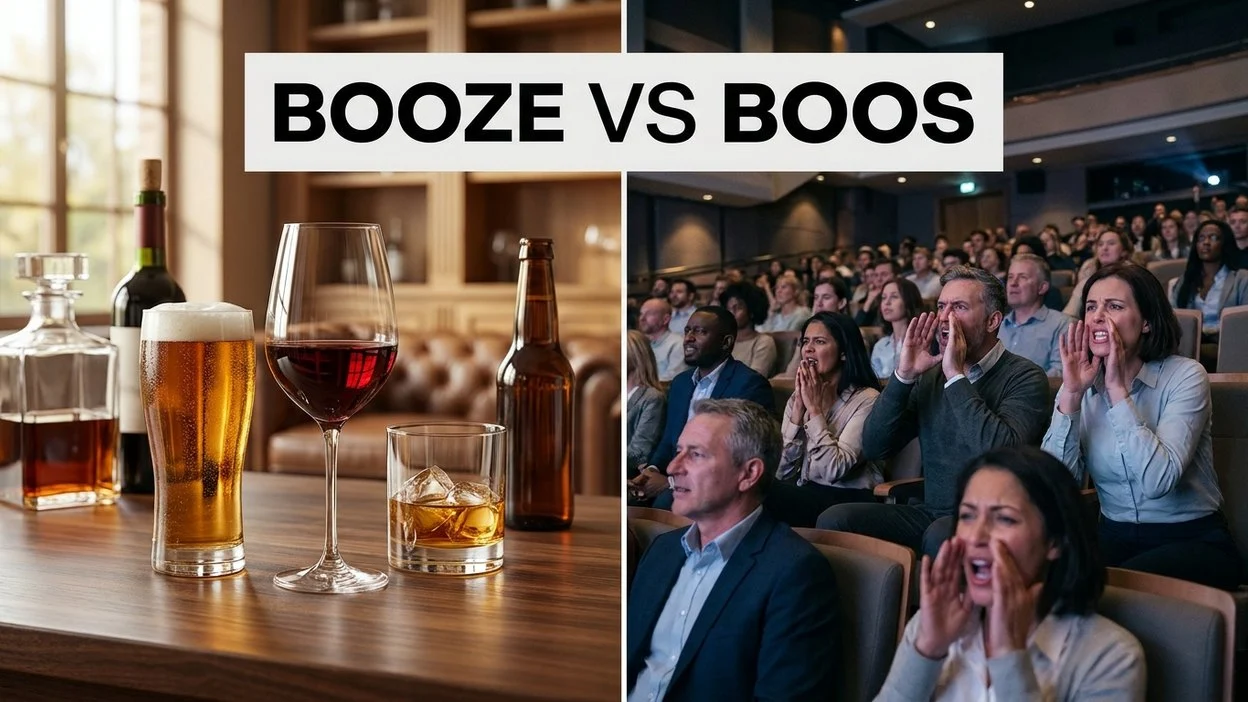
Have you ever wondered whether to write booze or boos? These two words look and sound similar, but they have completely different meanings. Choosing the wrong one can change the meaning of your sentence and create confusion for readers. The difference is simple once you understand how each word is used.
Booze is an informal word for alcoholic drinks or alcohol in general. Boos, on the other hand, is the plural form of boo, which usually refers to sounds people make to show disapproval. It can also refer to affectionate nicknames in certain informal contexts. Although both words have similar pronunciations, they are not interchangeable. In this guide, you’ll learn their definitions, grammatical uses, differences, and practical examples so you can confidently use the correct word in everyday writing and conversation.
Quick Answer: Booze vs Boos
Booze means alcoholic drinks or alcohol and is an informal, usually uncountable noun. Boos is the plural of boo, referring to sounds of disapproval made by an audience. Remember: booze is associated with drinking, while boos are associated with expressing disapproval.
Why Do People Confuse Booze and Boos?
People often confuse booze and boos because they have similar pronunciations and nearly identical spellings. Both words contain the same vowel sound, making them easy to mix up when listening or writing quickly.
However, their meanings, grammatical roles, and contexts are different.
Here are the main reasons for the confusion:
- Similar pronunciation: Both words are pronounced with a long oo sound.
- Similar spelling: They begin with the letter combination “boo.”
- Different meanings: One relates to alcoholic drinks, while the other commonly describes expressions of disapproval.
- Unfamiliar vocabulary: English learners may not recognize that booze is an informal word for alcohol.
Understanding their definitions makes the difference much easier to remember.
1. What Does Booze Mean?
Booze is an informal English word that means alcoholic drinks or alcohol in general. It is commonly used in casual conversations, entertainment, and everyday discussions.
It can refer to different alcoholic beverages, including:
- Beer
- Wine
- Whiskey
- Vodka
- Rum
- Other alcoholic drinks
Booze is generally an uncountable noun when referring to alcohol as a substance or category.
Examples:
- He bought some booze for the weekend party.
- They decided not to serve booze at the event.
- Too much booze can affect your health.
- The restaurant offers food and booze.
- She stopped drinking booze last year.
Can Booze Be Used as a Verb?
Yes. Booze can also function as an informal verb meaning to drink alcohol, often heavily or excessively.
Examples:
- They went out to booze after work.
- He spent the evening boozing with his friends.
- Some people booze heavily during holidays.
Word forms:
- Booze: Base verb or noun
- Boozes: Third-person singular verb
- Boozed: Past tense and past participle
- Boozing: Present participle or gerund
Remember: Booze is informal vocabulary. In formal writing, words such as alcohol or alcoholic beverages are usually more appropriate.
2. What Does Boos Mean?
Boos is the plural form of the noun boo. It commonly describes sounds people make to express disapproval, disappointment, or dislike.
People often boo performers, athletes, public speakers, or other individuals when they are unhappy with something.
Examples:
- The crowd responded with loud boos.
- The referee heard boos from the spectators.
- The actor received boos after his performance.
- The audience filled the theater with boos.
Can Boos Have Other Meanings?
Yes. The word boo can also be used as an informal term of affection for a romantic partner or someone close to you.
In this context, boos may refer to multiple people affectionately, although this plural usage is less common.
Examples:
- They called their partners their boos.
- The couple joked about being each other’s boos.
Additionally, boos can function as a verb when the subject is a singular third-person noun or pronoun.
Examples:
- The audience boos the singer.
- He boos whenever the referee makes a bad decision.
Remember: The most common meaning of boos is sounds of disapproval.
Booze vs Boos: Key Differences
| Feature | Booze | Boos |
|---|---|---|
| Main meaning | Alcoholic drinks | Sounds of disapproval |
| Word type | Noun or verb | Plural noun or verb |
| Base word | Booze | Boo |
| Pronunciation | /buːz/ | /buːz/ |
| Grammar | Usually uncountable as a noun | Countable plural noun |
| Common context | Parties and drinking | Sports and performances |
| Formality | Informal | Generally informal |
| Example | He bought some booze. | The crowd made loud boos. |
| Related word | Alcohol | Disapproval |
The most important difference is their meaning. Booze relates to alcohol, while boos usually describes expressions of disapproval.
When Should You Use Booze or Boos?
Choosing between these words becomes easy when you consider what you want to communicate.
When to Use Booze
Use booze when discussing alcoholic beverages or drinking alcohol.
Common situations include:
- Talking about alcohol at parties.
- Discussing someone’s drinking habits.
- Describing alcoholic drinks at restaurants.
- Talking about social events where alcohol is served.
- Discussing alcohol consumption in casual conversations.
Examples:
- We need to buy some booze for the celebration.
- The hotel does not allow guests to bring their own booze.
- He decided to avoid booze for a month.
When to Use Boos
Use boos when describing negative reactions from an audience or group of people.
Common situations include:
- A sports crowd expressing disappointment.
- An audience reacting negatively to a performance.
- People showing dissatisfaction with a decision.
- Spectators expressing disagreement with a speaker.
Examples:
- The player heard boos from the stadium.
- The politician received boos during his speech.
- Loud boos followed the disappointing announcement.
10+ Examples of Booze vs Boos in Sentences
The following examples show how to use both words correctly.
Examples Using Booze
- We bought some booze before heading to the party.
- The store sells different types of booze.
- He decided to stop drinking booze.
- Too much booze can lead to serious health problems.
- They brought food and booze to the celebration.
- My friends enjoy talking about different alcoholic drinks and booze.
- The restaurant serves expensive booze.
- He spent the night boozing with his coworkers.
Examples Using Boos
- The crowd responded with loud boos.
- The referee received boos from angry fans.
- The singer heard boos after finishing the performance.
- The audience started booing during the show.
- The team faced boos after losing the championship.
- His announcement was followed by several boos.
- The actor ignored the boos from the audience.
- The crowd boos whenever the opposing team scores.
Examples Showing Both Words
- The fans shouted boos while some guests enjoyed their booze.
- The party had plenty of booze, but the audience’s boos were unexpected.
These examples demonstrate that the words serve different purposes, even though they sound alike.
Common Mistakes When Using Booze and Boos
Even experienced English speakers sometimes mix up similar-sounding words. Here are some mistakes to avoid.
1. Using booze when talking about audience reactions
Incorrect: The audience made loud booze after the performance.
Correct: The audience made loud boos after the performance.
Why? The sentence describes disapproval, not alcoholic drinks.
2. Using boos when referring to alcohol
Incorrect: We bought some boos for the party.
Correct: We bought some booze for the party.
Why? The sentence refers to alcoholic beverages.
3. Assuming booze is always a plural noun
Incorrect: We purchased three boozes.
Correct: We purchased three alcoholic drinks.
Why? Booze is generally uncountable when referring to alcohol in general. However, specialized contexts may use it differently.
4. Forgetting that booze can be a verb
Incorrect: They went out for booze all night.
Correct: They went out boozing all night.
Why? When describing the activity of drinking alcohol, boozing is the appropriate verb form.
5. Thinking boos always express anger
Not necessarily. Boos usually communicate disapproval, disappointment, or dislike. The exact emotion depends on the situation.
Memory Trick: How to Remember Booze vs Boos
Here is a simple trick to remember the difference:
- Booze = Beverages: Both begin with the letter B, and booze refers to alcoholic beverages.
- Boos = Bad Reactions: Think of people shouting “Boo!” when they dislike something.
Remember these two simple associations:
Booze → Alcohol → Drinking
Boos → Audience → Disapproval
If the sentence talks about beer, wine, or other alcoholic drinks, choose booze. If it describes an audience reacting negatively, choose boos.
Booze vs Boos in American and British English
Both booze and boos are understood in American and British English. Their basic meanings and spellings do not change between these varieties.
However, their everyday usage can depend on the context.
In American English:
- Booze is a familiar informal word for alcohol.
- Boos commonly describes negative reactions from sports fans and audiences.
- Both words appear in everyday conversations and informal writing.
In British English:
- Booze is also a common informal term for alcoholic drinks.
- Boos is used for expressions of disapproval.
- The same spelling and basic grammatical rules apply.
There is no major American-versus-British spelling difference between these words.
Similar Words to Booze and Boos
Learning related vocabulary can help you understand these words more clearly.
| Word | Meaning | Example |
|---|---|---|
| Alcohol | A substance found in alcoholic drinks | Alcohol is served at the restaurant. |
| Liquor | A distilled alcoholic beverage | He ordered a glass of liquor. |
| Beverage | A drink of any kind | Water is a popular beverage. |
| Beer | An alcoholic drink made through fermentation | She ordered a bottle of beer. |
| Wine | An alcoholic drink usually made from fermented grapes | They served wine with dinner. |
| Boo | A sound expressing disapproval | Someone shouted boo during the show. |
| Jeer | A rude or mocking expression | The audience began to jeer. |
| Hiss | A sharp sound expressing disapproval | The performance received hisses. |
| Cheer | A shout expressing approval or excitement | The crowd gave a loud cheer. |
| Applause | Clapping to show appreciation | The actor received applause. |
These related words help you understand the difference between vocabulary associated with alcohol and vocabulary associated with audience reactions.
Final Verdict: Booze or Boos?
The correct choice depends on the meaning of your sentence.
Use booze when talking about alcoholic drinks or drinking alcohol. It is an informal word that can function as both a noun and a verb.
Use boos when referring to sounds of disapproval made by an audience or group of people. It is the plural form of boo and can also function as a verb.
Although both words sound alike, they are not interchangeable. Remembering their meanings and looking at the context will help you choose the correct word every time.
Frequently Asked Questions (FAQs)
1. What is the main difference between booze and boos?
Booze means alcoholic drinks or alcohol, while boos usually refers to sounds people make to express disapproval. They have similar pronunciations but completely different meanings.
2. Is booze a real English word?
Yes. Booze is a recognized informal English word for alcoholic drinks. It can also function as a verb meaning to drink alcohol, often heavily.
3. Is boos the plural of boo?
Yes. Boos is the standard plural form of boo. It commonly describes multiple sounds of disapproval made by an audience.
4. Are booze and boos pronounced the same?
Yes. In standard American English, both words are generally pronounced /buːz/. Their spelling and meaning distinguish them in written English.
5. Can booze be used as a verb?
Yes. Booze can be used as an informal verb meaning to drink alcohol. For example: “They went out to booze with their friends.”
6. Does boos always mean disapproval?
No. Although boos most commonly describes sounds of disapproval, boo can also be an affectionate nickname. In informal contexts, boos may refer to multiple loved ones or romantic partners.
7. Is booze formal or informal English?
Booze is informal English. It is suitable for casual conversations but may not be appropriate for academic, professional, or formal writing. Use alcohol or alcoholic beverages when a more formal expression is needed.
Remember This
- Booze means alcoholic drinks or alcohol.
- Boos usually means sounds of disapproval.
- Booze can function as a noun or verb.
- Boos is the plural of boo and can also be a verb.
- Both words have the same standard pronunciation.
- Neither word is a correct substitute for the other.
- Context helps you choose the right spelling.
Conclusion
Understanding the difference between booze and boos is simple once you learn their meanings. Booze refers to alcoholic drinks or drinking alcohol, whereas boos usually describes negative reactions from an audience. Their similar pronunciation can cause confusion, but their spelling and grammatical uses are different.
Whether you’re writing an everyday message, completing an English assignment, or improving your vocabulary, remember the simple distinction: booze is about alcohol, and boos are about reactions. With these definitions and examples, you can use both words confidently and correctly.

Charles Cody is a talented author recognized for engaging storytelling, memorable characters, and imaginative plots. His books inspire readers through creativity, emotional depth, and meaningful literary experiences worldwide.