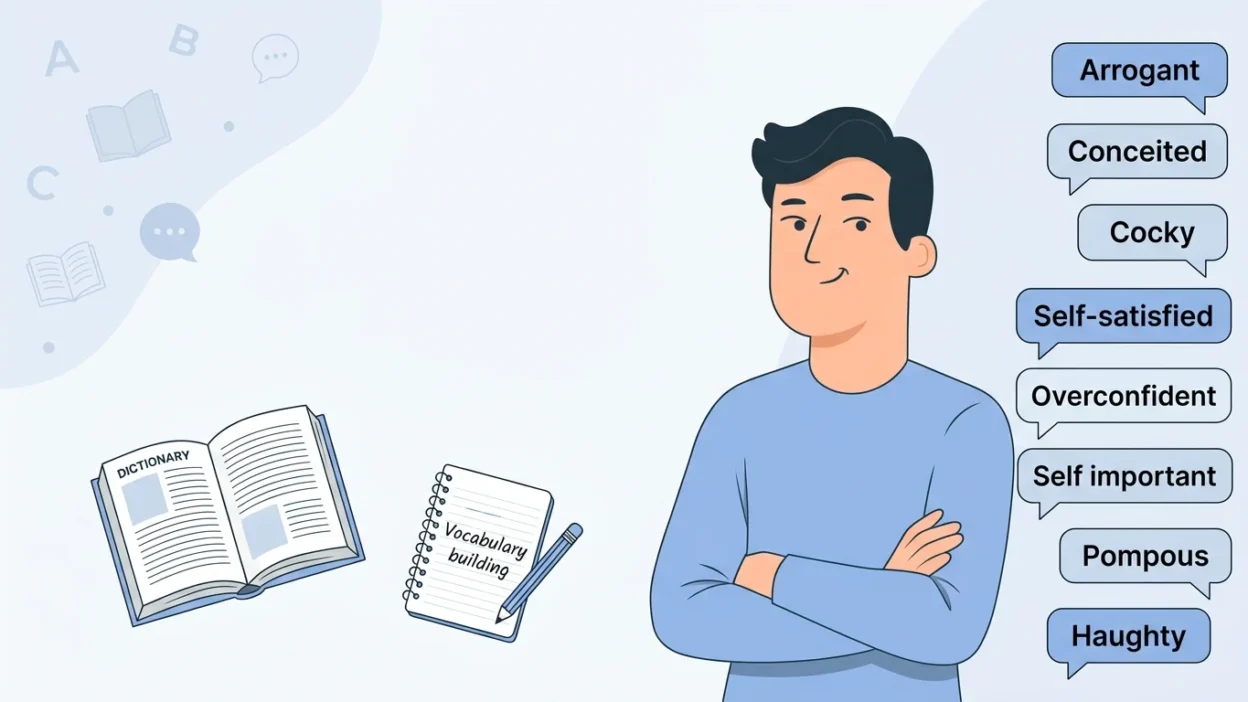
The word smug describes a person who feels too pleased with themselves. A smug person may act as if they are better than others, more correct, or more successful. The tone is usually negative. It can sound annoying, proud, or quietly rude.
People search for synonyms for smug because they want better word choices in writing, reading, and speaking. Students may see the word in books or exams. ESL learners may want a simple meaning. Writers and content creators may need a stronger, more accurate word depending on the situation. This guide explains the word in easy English and gives useful alternatives with examples.
What Does “Smug” Mean?
Smug means feeling too confident and satisfied with yourself, especially in a way that other people do not like. It often suggests a person thinks they are smarter, better, or more successful than others.
Tone: negative or slightly rude
Usage context: criticism, description of personality, reaction to success, or judgment of behavior
Example:
He gave a smug smile after winning the game.
Quick Note on “Demure”
The word demure does not mean smug. It means quiet, modest, shy, or reserved. A demure person may seem polite and calm, not proud or showy.
Tone: gentle, soft, and modest
Usage context: describing behavior, appearance, or style in a respectful way
Example:
She gave a demure smile and looked down politely.
Synonym Guide: Meanings, Examples, and Best Use
1. Self satisfied
Word: self satisfied
Meaning: happy with yourself in a way that can seem annoying
Example sentence: He wore a self satisfied look after answering the question.
Best usage context: everyday writing, criticism, simple description
2. Conceited
Word: conceited
Meaning: too proud of yourself; believing you are special
Example sentence: She sounded conceited when she talked about her grades.
Best usage context: strong negative description, formal and informal writing
3. Arrogant
Word: arrogant
Meaning: believing you are better than other people
Example sentence: The manager’s arrogant tone made everyone uncomfortable.
Best usage context: formal writing, essays, serious character description
4. Cocky
Word: cocky
Meaning: overly confident in a bold and irritating way
Example sentence: He was too cocky before the final match.
Best usage context: casual speech, sports, youth writing
5. Vain
Word: vain
Meaning: too focused on your appearance or importance
Example sentence: She seemed vain because she kept checking the mirror.
Best usage context: appearance, personality, character analysis
6. Haughty
Word: haughty
Meaning: acting proud and rude, as if others are lower than you
Example sentence: The haughty guest spoke to the staff coldly.
Best usage context: literary writing, formal descriptions
7. Superior
Word: superior
Meaning: acting as if you are above other people
Example sentence: His superior attitude annoyed the whole team.
Best usage context: workplace, school, judgmental behavior
8. Proud
Word: proud
Meaning: feeling strong satisfaction in yourself or your achievements
Example sentence: She was proud after finishing her project.
Best usage context: positive pride, but in some contexts can suggest smugness
9. Boastful
Word: boastful
Meaning: talking too much about your own success
Example sentence: He became boastful after winning the prize.
Best usage context: speech, character traits, informal criticism
10. Proud of oneself
Word: proud of oneself
Meaning: feeling pleased in a way that may seem obvious to others
Example sentence: He looked very proud of oneself after the announcement.
Best usage context: simple, beginner friendly writing
11. Full of oneself
Word: full of oneself
Meaning: thinking too highly of yourself
Example sentence: She is so full of herself that she never listens.
Best usage context: informal speaking, casual criticism
12. Pompous
Word: pompous
Meaning: acting important in a silly or annoying way
Example sentence: The speaker sounded pompous during the entire lecture.
Best usage context: formal criticism, writing about speech or style
13. Snobbish
Word: snobbish
Meaning: looking down on people you think are less important
Example sentence: Her snobbish behavior made new students feel unwelcome.
Best usage context: social behavior, class or status related writing
14. Patronizing
Word: patronizing
Meaning: speaking to others as if they are less smart or less important
Example sentence: His patronizing voice made the class uncomfortable.
Best usage context: conversation, workplace, teaching, criticism
15. Overconfident
Word: overconfident
Meaning: more confident than is safe or wise
Example sentence: The overconfident player made careless mistakes.
Best usage context: school, sports, performance, analysis
16. Complacent
Word: complacent
Meaning: too satisfied, so you stop trying to improve
Example sentence: The team became complacent after a few easy wins.
Best usage context: business, learning, performance, self improvement
17. Pleased with oneself
Word: pleased with oneself
Meaning: feeling happy about your own actions or success
Example sentence: He looked pleased with himself after fixing the problem.
Best usage context: neutral to slightly negative description
18. Pretentious
Word: pretentious
Meaning: trying to seem more important, smart, or special than you are
Example sentence: The restaurant felt pretentious, not welcoming.
Best usage context: style, behavior, writing, culture criticism
19. Stuck up
Word: stuck up
Meaning: acting too proud and unfriendly
Example sentence: Some people thought she was stuck up, but she was just shy.
Best usage context: informal speech, casual criticism
20. Egotistical
Word: egotistical
Meaning: too focused on yourself and your own importance
Example sentence: His egotistical comments ruined the meeting.
Best usage context: formal writing, personality analysis
21. Toxic
Word: toxic
Meaning: deeply self focused and needing admiration
Example sentence: The character was toxic and cared only about fame.
Best usage context: psychology, literature, serious character study
22. Vain glorious
Word: vain glorious
Meaning: proudly showing off your success in a showy way
Example sentence: The knight gave a vain glorious speech after the battle.
Best usage context: old style, literary, or formal writing
23. Superior minded
Word: superior minded
Meaning: thinking you are above others
Example sentence: Her superior minded attitude pushed people away.
Best usage context: descriptive writing, character criticism
24. Insolent
Word: insolent
Meaning: rude and disrespectful, often in a bold way
Example sentence: The insolent reply shocked the teacher.
Best usage context: behavior, discipline, formal or serious writing
25. Disdainful
Word: disdainful
Meaning: showing dislike because you think something is not good enough
Example sentence: He gave a disdainful look at the old shoes.
Best usage context: literary writing, emotional description
26. Condescending
Word: condescending
Meaning: acting kind but in a way that makes others feel small
Example sentence: Her condescending smile made the student feel worse.
Best usage context: workplace, teaching, relationships, criticism
27. Touchy proud
Word: touchy proud
Meaning: sensitive and proud at the same time
Example sentence: He became touchy proud when anyone questioned his work.
Best usage context: simple character description, informal explanation
28. Self important
Word: self important
Meaning: acting like your opinions or role matter more than others’
Example sentence: The self important guest demanded special treatment.
Best usage context: workplace, social behavior, criticism
29. Vainly proud
Word: vainly proud
Meaning: proud in a shallow or showy way
Example sentence: She gave a vainly proud smile after the speech.
Best usage context: literary or creative writing
30. Too pleased with oneself
Word: too pleased with oneself
Meaning: feeling overly happy and satisfied about your own success
Example sentence: He was too pleased with himself after getting one easy answer right.
Best usage context: beginner friendly writing, simple explanation
Comparison Table: When to Use Different Synonyms
| Word | Tone | Best For | Strength |
| smug | negative, calm criticism | general use | medium |
| self satisfied | mild negative | everyday writing | medium |
| arrogant | strong negative | formal or serious writing | strong |
| cocky | informal negative | speech, sports, casual writing | medium |
| vain | critical, focused on appearance | personality or looks | medium |
| haughty | formal, literary | elegant or serious writing | strong |
| patronizing | negative, sharp | speech or behavior | strong |
| pretentious | negative | style, culture, writing | medium |
| condescending | negative, direct | workplace, teaching, relationships | strong |
| self important | negative | general criticism | medium |
How to Choose the Right Synonym
Choose the synonym based on tone, setting, and meaning.
Use mild words when you want soft criticism
If you want a gentle tone, use words like self satisfied, pleased with oneself, or too pleased with oneself. These words are useful in beginner writing, simple descriptions, and polite criticism.
Use stronger words when the behavior feels rude
If a person seems openly rude or superior, use arrogant, condescending, patronizing, or self important. These words are stronger and work well in formal writing, essays, and character analysis.
Use informal words in casual speech
For everyday English, cocky, stuck up, and full of oneself sound natural. These are common in conversation and social writing.
Use literary words for richer descriptions
If you are writing a story, article, or advanced paragraph, words like haughty, disdainful, pompous, and vain glorious can add style and depth.
Use psychology related words carefully
Words like egotistical and toxic are stronger and more serious. They suggest deep self focus, so they should be used carefully and only when the meaning fits.
Summary of the Best Options
If you need the closest everyday alternatives to smug, the best choices are:
- self satisfied
- conceited
- arrogant
- cocky
- full of oneself
- contemptuous
- condescending
- self important
These are the most useful because they show the same feeling of overconfidence, pride, or superiority.
Conclusion
The phrase synonyms for smug includes many words with slightly different shades of meaning. Some are mild, like self satisfied. Some are stronger, like arrogant or condescending. Others are more informal, like cocky or stuck up. Knowing these differences helps students, ESL learners, writers, and content creators choose the right word for the right moment.
Remember this simple rule:
Smug usually means too pleased with yourself in an annoying way.
Choose a synonym based on how strong, formal, or casual you want the tone to be.

Logan Hayes is a professional editor and language researcher passionate about improving English skills. He creates informative articles that encourage confident writing, stronger vocabulary, and effective everyday communication.