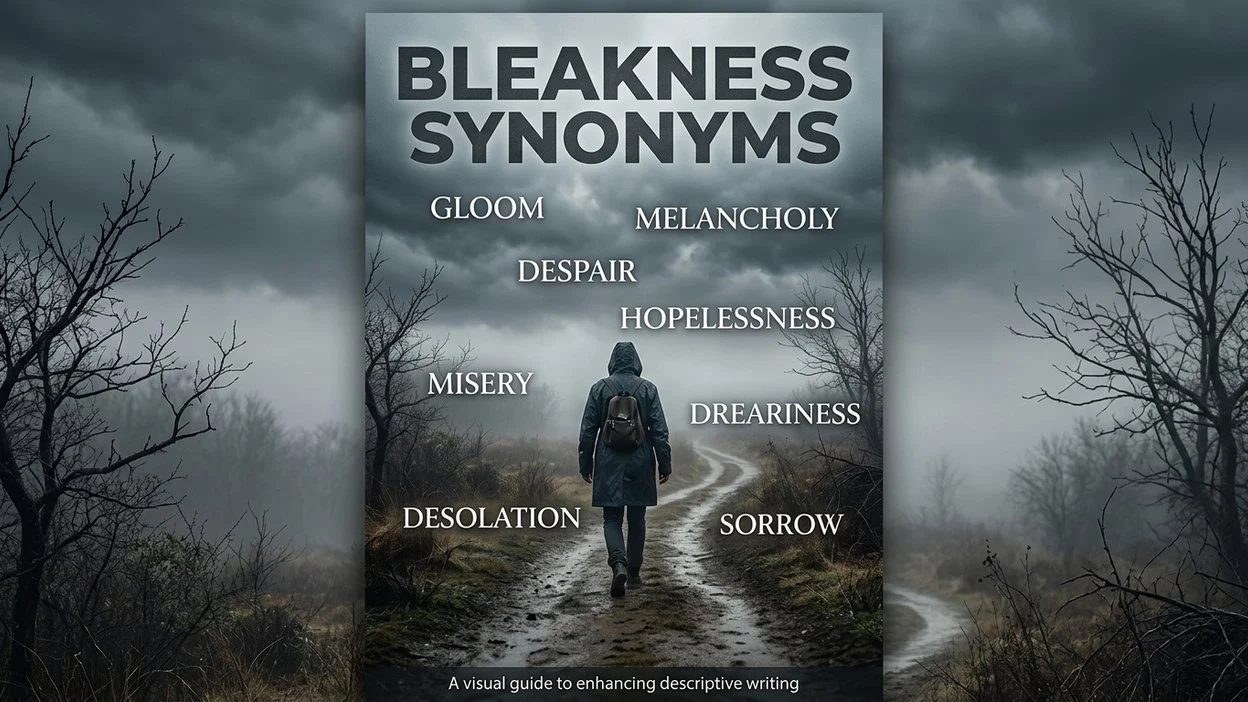
If you’re looking for a synonym for bleakness, there are many words that can express sadness, hopelessness, emptiness, darkness, or a lack of optimism. The best synonym depends on the situation. For example, gloom works well when describing a dark mood, while despair is stronger and shows a complete loss of hope.
Understanding different synonyms for bleakness can improve your writing, expand your vocabulary, and help you express emotions more accurately. Whether you’re a student, ESL learner, writer, or content creator, learning these alternatives will make your communication clearer and more engaging.
Quick Answer
Bleakness means a state of sadness, hopelessness, emptiness, or lack of encouragement.
Common synonyms for bleakness include:
- Gloom
- Despair
- Misery
- Sadness
- Depression
- Melancholy
- Hopelessness
- Sorrow
- Dismalness
- Dejection
The best synonym depends on the intensity and context of the feeling or situation.
Meaning and Usage of Bleakness
Bleakness is a noun that describes something that feels gloomy, depressing, hopeless, or lacking warmth and positivity.
Examples
- The bleakness of the winter landscape made the village seem abandoned.
- After losing his job, he struggled with feelings of bleakness.
- The novel captures the bleakness of life during difficult times.
Common Contexts
- Emotional states
- Literature and poetry
- Weather descriptions
- Economic conditions
- Social issues
- Personal struggles
30 Synonyms for Bleakness
1. Gloom
Simple Meaning: Darkness or sadness.
Example Sentence: A feeling of gloom filled the room after the announcement.
Best Usage/Context: General sadness or dark atmosphere.
2. Despair
Simple Meaning: Complete loss of hope.
Example Sentence: She felt despair when all her plans failed.
Best Usage/Context: Extreme hopelessness.
3. Misery
Simple Meaning: Great unhappiness.
Example Sentence: The long illness caused months of misery.
Best Usage/Context: Strong emotional suffering.
4. Sadness
Simple Meaning: Feeling unhappy.
Example Sentence: His sadness was visible on his face.
Best Usage/Context: Everyday emotional situations.
5. Depression
Simple Meaning: Deep sadness or low mood.
Example Sentence: The economic depression affected millions of people.
Best Usage/Context: Emotional or economic contexts.
6. Melancholy
Simple Meaning: Gentle, thoughtful sadness.
Example Sentence: The song carried a sense of melancholy.
Best Usage/Context: Literature and artistic writing.
7. Hopelessness
Simple Meaning: Feeling that nothing will improve.
Example Sentence: Hopelessness spread through the struggling community.
Best Usage/Context: Emotional and social situations.
8. Sorrow
Simple Meaning: Deep sadness.
Example Sentence: The family shared their sorrow after the loss.
Best Usage/Context: Grief and emotional pain.
9. Dismalness
Simple Meaning: A gloomy condition.
Example Sentence: The dismalness of the weather ruined the picnic.
Best Usage/Context: Weather and atmosphere.
10. Dejection
Simple Meaning: Discouragement and low spirits.
Example Sentence: He spoke with obvious dejection.
Best Usage/Context: Personal disappointment.
11. Desolation
Simple Meaning: Emptiness and loneliness.
Example Sentence: The abandoned town showed signs of desolation.
Best Usage/Context: Places and emotional isolation.
12. Wretchedness
Simple Meaning: Extreme unhappiness.
Example Sentence: The story described the wretchedness of poverty.
Best Usage/Context: Severe suffering.
13. Mournfulness
Simple Meaning: A feeling of grief.
Example Sentence: Her voice carried mournfulness.
Best Usage/Context: Emotional expression.
14. Heartache
Simple Meaning: Emotional pain.
Example Sentence: The breakup caused months of heartache.
Best Usage/Context: Personal relationships.
15. Distress
Simple Meaning: Anxiety or suffering.
Example Sentence: The news caused widespread distress.
Best Usage/Context: Emotional discomfort.
16. Unhappiness
Simple Meaning: Lack of joy.
Example Sentence: His unhappiness affected his work.
Best Usage/Context: General emotional state.
17. Anguish
Simple Meaning: Severe mental pain.
Example Sentence: The decision brought her great anguish.
Best Usage/Context: Intense emotional suffering.
18. Grief
Simple Meaning: Deep sadness after loss.
Example Sentence: Grief can take time to heal.
Best Usage/Context: Bereavement and loss.
19. Lamentation
Simple Meaning: Expression of sorrow.
Example Sentence: Songs of lamentation echoed through the hall.
Best Usage/Context: Formal and literary writing.
20. Dreariness
Simple Meaning: Dull and depressing quality.
Example Sentence: The dreariness of the rainy week affected everyone.
Best Usage/Context: Weather and surroundings.
21. Darkness
Simple Meaning: Lack of light or hope.
Example Sentence: The novel explores emotional darkness.
Best Usage/Context: Symbolic and literary use.
22. Pessimism
Simple Meaning: Expecting bad outcomes.
Example Sentence: His pessimism made teamwork difficult.
Best Usage/Context: Attitudes and outlooks.
23. Forlornness
Simple Meaning: Feeling abandoned.
Example Sentence: The puppy’s forlornness touched everyone.
Best Usage/Context: Loneliness and abandonment.
24. Disheartenment
Simple Meaning: Loss of confidence.
Example Sentence: Repeated failures led to disheartenment.
Best Usage/Context: Motivation and setbacks.
25. Low Spirits
Simple Meaning: Feeling down.
Example Sentence: She was in low spirits after the exam.
Best Usage/Context: Everyday conversation.
26. Despondency
Simple Meaning: Deep discouragement.
Example Sentence: A sense of despondency settled over the team.
Best Usage/Context: Formal writing.
27. Affliction
Simple Meaning: Pain or suffering.
Example Sentence: The disease caused great affliction.
Best Usage/Context: Hardship and suffering.
28. Gloominess
Simple Meaning: A dark or sad feeling.
Example Sentence: The gloominess of the sky suggested rain.
Best Usage/Context: Mood and weather.
29. Deprivation
Simple Meaning: Lack of necessities.
Example Sentence: Years of deprivation affected the region.
Best Usage/Context: Social and economic issues.
30. Adversity
Simple Meaning: Difficult circumstances.
Example Sentence: She remained strong despite adversity.
Best Usage/Context: Challenges and hardships.
Comparison Table
| Synonym | Strength | Common Use |
| Sadness | Mild | Everyday emotions |
| Gloom | Mild to Medium | Mood and atmosphere |
| Melancholy | Medium | Literature and art |
| Sorrow | Medium to Strong | Loss and grief |
| Despair | Very Strong | Total hopelessness |
| Anguish | Very Strong | Emotional pain |
| Desolation | Strong | Emptiness and loneliness |
| Pessimism | Medium | Negative outlook |
| Dreariness | Mild | Weather and surroundings |
| Adversity | Medium | Difficult situations |
How to Choose the Right Synonym
For Everyday Conversations
Use:
- Sadness
- Unhappiness
- Low Spirits
- Gloom
These words are simple and widely understood.
For Strong Emotional Pain
Use:
- Despair
- Anguish
- Grief
- Heartache
These words communicate intense feelings.
For Literary or Creative Writing
Use:
- Melancholy
- Desolation
- Forlornness
- Lamentation
These choices create vivid imagery and emotional depth.
For Negative Situations
Use:
- Adversity
- Distress
- Deprivation
- Affliction
These words focus on difficult circumstances rather than emotions.
For Dark Atmospheres
Use:
- Gloominess
- Dreariness
- Dismalness
- Darkness
These are ideal for describing settings and environments.
Common Mistakes When Using Bleakness Synonyms
Confusing Sadness and Despair
Sadness is ordinary unhappiness.
Despair means losing all hope.
Using Melancholy for Extreme Suffering
Melancholy usually suggests gentle, reflective sadness.
For severe pain, choose anguish or despair.
Mixing Adversity and Bleakness
Adversity refers to difficult circumstances.
Bleakness often describes the emotional feeling created by those circumstances.
Using Depression Too Broadly
The word depression can refer to a mood, a medical condition, or an economic downturn. Make sure the meaning is clear from the context.
Frequently Asked Questions
What is the best synonym for bleakness?
Gloom, despair, sadness, and hopelessness are among the most common synonyms. The best choice depends on the situation and intensity.
Is bleakness always negative?
Yes. Bleakness generally describes something unpleasant, gloomy, discouraging, or lacking hope.
What synonym is strongest for bleakness?
Despair, anguish, and wretchedness are among the strongest alternatives because they express severe emotional suffering.
What is a literary synonym for bleakness?
Melancholy, desolation, forlornness, and lamentation are often used in literature and creative writing.
Can bleakness describe places?
Yes. Bleakness can describe landscapes, buildings, weather, and environments that seem cold, empty, or depressing.
Is gloom the same as bleakness?
They are similar, but gloom often refers to darkness or sadness, while bleakness usually includes a stronger sense of hopelessness or emptiness.
What synonym works best for weather?
Dreariness, gloominess, dismalness, and darkness are excellent choices when describing weather conditions.
How can I improve my vocabulary for bleakness?
Read widely, study synonyms in context, and practice using different alternatives in your writing and conversations.
Conclusion
The word bleakness describes feelings or situations marked by sadness, emptiness, gloom, or hopelessness. While words such as gloom, sadness, and melancholy work well for mild emotions, stronger alternatives like despair, anguish, and desolation communicate deeper levels of suffering and hopelessness. Choosing the right synonym depends on your tone, audience, and purpose.
By learning these 30 synonyms, their meanings, examples, and best uses, you can express ideas more accurately, strengthen your writing, and communicate emotions with greater clarity and confidence.

Carter Brooks writes educational content that helps readers understand word meanings, synonyms, and writing techniques. He believes simple explanations inspire lifelong learning and stronger communication skills for everyone.