
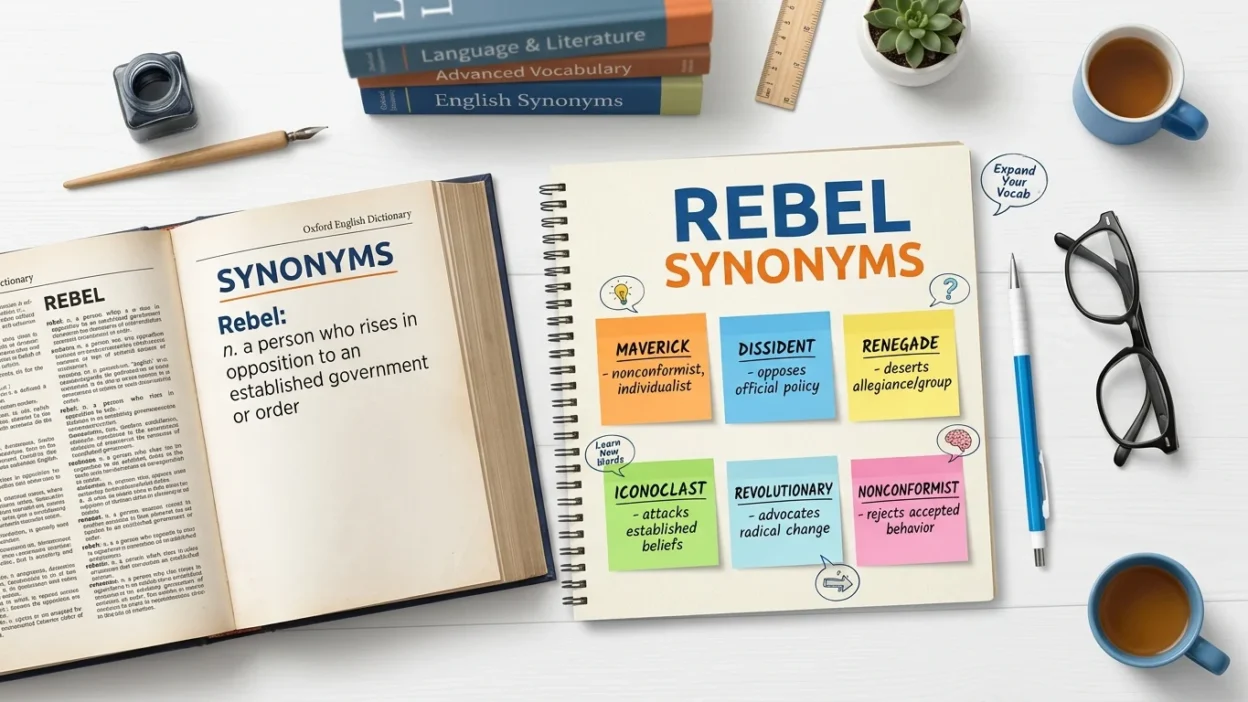
The phrase “rebel synonyms” is useful for students, ESL learners, writers, and content creators who want to speak and write with more precision. The word rebel can mean a person who goes against authority, rules, or accepted ideas. It can also describe a strong feeling of resistance or disobedience.
Learning rebel synonyms helps you choose the right word for the right situation. Some words sound formal, some sound literary, and some are better for everyday English. When you understand these differences, your writing becomes clearer, stronger, and more natural.
30 Rebel Synonyms You Should Know
1. Rebel
- Meaning: A person who refuses to follow authority or accepted rules.
- Example sentence: The rebel refused to obey the unfair order.
- Best usage context: General use; the main word itself.
2. Dissident
- Meaning: A person who disagrees with official ideas or government rules.
- Example sentence: The dissident spoke against the strict policy.
- Best usage context: Political, formal, or serious writing.
3. Dissenter
- Meaning: Someone who does not agree with the majority.
- Example sentence: She was the only dissenter in the meeting.
- Best usage context: Group discussions, debates, and formal English.
4. Insurgent
- Meaning: A person who fights against an established government or authority.
- Example sentence: The insurgent group took control of the area.
- Best usage context: News, history, politics, and conflict writing.
5. Revolutionary
- Meaning: A person who supports major change in society or government.
- Example sentence: The revolutionary wanted a new political system.
- Best usage context: History, politics, and powerful change related writing.
6. Mutineer
- Meaning: A person who rebels against a leader, especially in the military or on a ship.
- Example sentence: The mutineer led the soldiers against their commander.
- Best usage context: Military history, stories, and formal reports.
7. Renegade
- Meaning: Someone who leaves a group, cause, or belief and becomes rebellious.
- Example sentence: The renegade broke away from the organization.
- Best usage context: Dramatic writing, stories, and strong description.
8. Maverick
- Meaning: A person who thinks and acts independently, not like others.
- Example sentence: He was a maverick who never followed trends.
- Best usage context: Creative people, business, and personality descriptions.
9. Nonconformist
- Meaning: A person who does not follow social rules or common behavior.
- Example sentence: As a nonconformist, she dressed in her own unique style.
- Best usage context: Lifestyle, personality, and social behavior.
10. Iconoclast
- Meaning: A person who challenges old beliefs, traditions, or systems.
- Example sentence: The artist was an iconoclast who questioned everything.
- Best usage context: Literature, art, ideas, and intellectual writing.
11. Free Spirit
- Meaning: A person who lives in an independent and open way.
- Example sentence: He is a free spirit who dislikes strict routines.
- Best usage context: Friendly, personal, and lifestyle writing.
12. Independent Thinker
- Meaning: A person who thinks for themselves instead of copying others.
- Example sentence: She is an independent thinker with bold ideas.
- Best usage context: Education, leadership, and self development content.
13. Defiant
- Meaning: Showing refusal to obey or be controlled.
- Example sentence: He gave a defiant look to the teacher.
- Best usage context: Personality description and emotional scenes.
14. Rebellious
- Meaning: Acting against rules or authority in a strong way.
- Example sentence: The rebellious teen argued with every rule.
- Best usage context: Everyday English, character writing, and psychology.
15. Challenger
- Meaning: A person who questions power or tries to defeat the leader.
- Example sentence: The challenger wanted to change the system.
- Best usage context: Sports, competition, politics, and authority.
16. Protester
- Meaning: A person who shows public disagreement.
- Example sentence: The protesters gathered outside the building.
- Best usage context: News, social issues, and public events.
17. Activist
- Meaning: A person who works for social or political change.
- Example sentence: The activist fought for clean water in the village.
- Best usage context: Social change, human rights, and community work.
18. Radical
- Meaning: Someone who wants deep or extreme change.
- Example sentence: The radical plan changed the whole organization.
- Best usage context: Politics, reform, and strong change discussions.
19. Insubordinate
- Meaning: Refusing to obey a boss, teacher, or authority figure.
- Example sentence: The insubordinate employee ignored the supervisor.
- Best usage context: Workplace, school, and formal discipline writing.
20. Disobedient
- Meaning: Not following rules or instructions.
- Example sentence: The child was disobedient during class.
- Best usage context: Parenting, school, and simple everyday English.
21. Rule Breaker
- Meaning: A person who does not follow rules.
- Example sentence: The rule breaker ignored the school policy.
- Best usage context: Casual writing, youth culture, and simple speech.
22. Troublemaker
- Meaning: A person who causes problems or conflict.
- Example sentence: The troublemaker started a fight in the hallway.
- Best usage context: Informal English and character description.
23. Outsider
- Meaning: A person who does not fully belong to a group.
- Example sentence: He felt like an outsider in the new town.
- Best usage context: Social writing, fiction, and emotional expression.
24. Contrarian
- Meaning: A person who often disagrees with popular opinion.
- Example sentence: The contrarian always argued the opposite view.
- Best usage context: Opinion writing, debates, and analysis.
25. Resister
- Meaning: A person who resists control, pressure, or change.
- Example sentence: The resister refused to accept unfair treatment.
- Best usage context: Social issues, resistance movements, and formal writing.
26. Insurrectionist
- Meaning: A person who takes part in a rebellion against authority.
- Example sentence: The insurrectionist joined the armed uprising.
- Best usage context: History, politics, and conflict related content.
27. Firebrand
- Meaning: A person who excites strong emotions or supports bold change.
- Example sentence: The firebrand leader energized the crowd.
- Best usage context: Politics, speeches, and dramatic writing.
28. Agitator
- Meaning: A person who encourages others to protest or challenge power.
- Example sentence: The agitator spread anger through the crowd.
- Best usage context: Politics, social conflict, and formal criticism.
29. Freethinker
- Meaning: A person who forms ideas without following tradition blindly.
- Example sentence: The freethinker questioned every old belief.
- Best usage context: Philosophy, education, and intellectual writing.
30. Defier
- Meaning: A person who openly refuses to obey or accept something.
- Example sentence: The defier stood up to the strict rules.
- Best usage context: Strong, direct writing with a bold tone.
Comparison Guide: When to Use Different Rebel Synonyms
| Word | Tone | Best Use |
| Rebel | Common | General use |
| Dissident | Formal | Politics and disagreement |
| Maverick | Positive | Independent personality |
| Iconoclast | Intellectual | Ideas and traditions |
| Insurgent | Serious | Conflict and rebellion |
| Protester | Neutral | Public demonstration |
| Activist | Positive | Social change |
| Renegade | Dramatic | Strong character writing |
How to Choose the Right Synonym
Choose your word based on tone, context, and meaning.
Use formal words like dissident, insurgent, or insurrectionist when writing about politics, conflict, or history. These words sound serious and precise.
Use positive or creative words like maverick, free spirit, or independent thinker when you want to describe someone in a flattering way. These words often suggest originality and confidence.
Use negative or strong words like troublemaker, insubordinate, or disobedient when the person is causing problems or breaking rules.
Use intellectual or literary words like iconoclast, contrarian, or freethinker when you are writing about ideas, opinions, or culture.
The safest way to choose the right rebel synonym is to ask:
Is this person resisting authority, thinking differently, or causing conflict?
That question will help you pick the best word.
Conclusion
The phrase rebel synonyms covers many useful words with different shades of meaning. Some words describe political resistance. Some describe independent thinking. Others describe rule breaking, protest, or strong personality.
When you learn these rebel synonyms, your vocabulary becomes richer and more accurate. You can write better essays, create clearer content, and understand English more deeply. The key is simple: choose the word that matches the situation, the tone, and the message you want to send.

Ethan Cross is a language enthusiast and content writer who creates practical vocabulary guides. He enjoys helping readers improve communication through clear explanations, engaging examples, and easy-to-understand educational resources.