
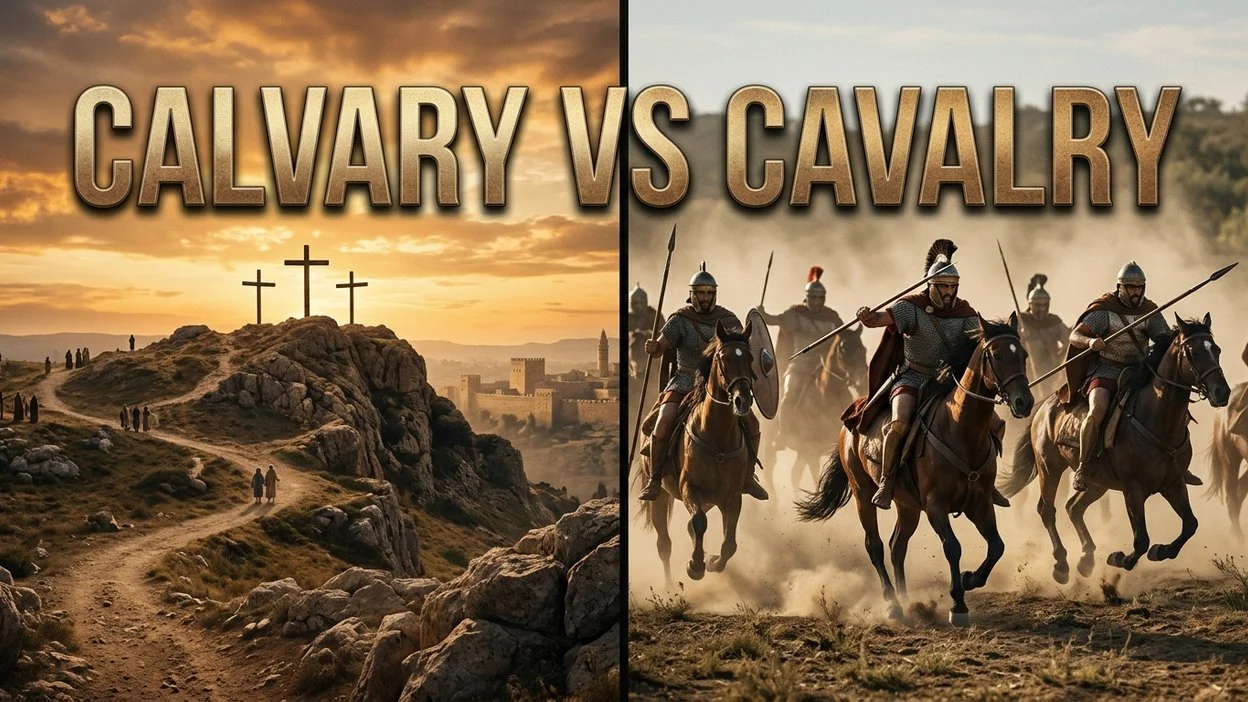
Have you ever wondered whether the correct word is calvary or cavalry? These two words look and sound almost identical, but they have completely different meanings. Confusing them can change the meaning of a sentence, especially when writing about history, religion, or military subjects.
The main difference between calvary and cavalry is that Calvary refers to the biblical place where Jesus Christ was crucified, while cavalry refers to soldiers who traditionally fought on horseback. Both words are correctly spelled, but they cannot be used interchangeably. Understanding their definitions, pronunciation, and examples will help you choose the right word every time. Whether you are a student, an English learner, or simply improving your vocabulary, this guide explains everything in simple language.
Quick Answer: Calvary vs Cavalry
Calvary is the place outside Jerusalem where Jesus Christ was crucified, according to Christian tradition. Cavalry refers to a military unit of soldiers who traditionally fought while riding horses. Remember: Calvary is connected to Christianity, while cavalry is connected to soldiers, horses, and military history.
Why Do People Confuse Calvary and Cavalry?
People often confuse calvary and cavalry because their spelling and pronunciation are very similar. Both words contain almost the same letters, and their sounds can be difficult to distinguish in everyday conversation.
There are three main reasons for this confusion:
- Similar spelling: Both words begin with almost the same letters and have a similar overall appearance.
- Similar pronunciation: Their sounds are close enough that listeners may mistake one for the other.
- Unfamiliar meanings: People who rarely encounter religious or historical vocabulary may not know what separates the two words.
However, their meanings are completely different. One is associated with an important event in Christianity, while the other describes a type of military force.
1. Calvary: Meaning, Definition, and Examples
Calvary (pronounced KAL-vuh-ree) is the name traditionally given to the place outside Jerusalem where Jesus Christ was crucified.
In Christian tradition, Calvary is associated with the crucifixion, suffering, sacrifice, and death of Jesus. The name is commonly used in religious discussions, Christian literature, churches, and biblical teachings.
The word comes through Latin Calvaria, meaning “skull.” It is associated with the biblical name Golgotha, which is also translated as “Place of a Skull.”
When Is Calvary Used?
Use Calvary when discussing:
- The crucifixion of Jesus Christ.
- Christian beliefs and religious teachings.
- Biblical history and the events surrounding Jesus’s death.
- Churches, monuments, or religious artwork representing the crucifixion.
- Symbolic references to sacrifice and suffering.
Examples of Calvary in Sentences
- Christians remember the sacrifice of Jesus at Calvary.
- The pastor explained the biblical significance of Calvary.
- The church displayed a beautiful painting of Calvary.
- The story described Jesus’s journey to Calvary.
- Many religious songs refer to the suffering at Calvary.
Easy explanation: Calvary is a religious term connected to the crucifixion of Jesus Christ.
2. Cavalry: Meaning, Definition, and Examples
Cavalry (pronounced KAV-uhl-ree) refers to soldiers who traditionally fought while riding horses.
Historically, cavalry units played an important role in warfare. Soldiers on horseback were used for fast attacks, reconnaissance, pursuing enemies, and carrying messages across battlefields.
Although traditional horse-mounted cavalry is less common in modern warfare, the word is still used in military history and in the names of certain modern military formations.
Cavalry can also appear in informal expressions. For example, “send in the cavalry” means bringing help or support when a difficult situation needs to be handled.
When Is Cavalry Used?
Use cavalry when discussing:
- Soldiers who fought on horseback.
- Historical battles and military operations.
- Horse-mounted military units.
- Military history and historical fiction.
- Modern military formations that use the traditional cavalry designation.
- Figurative expressions describing people who arrive to provide help.
Examples of Cavalry in Sentences
- The cavalry charged across the battlefield.
- The general ordered the cavalry to attack.
- Historical books often describe the importance of cavalry.
- The soldiers trained their horses for battle.
- The cavalry arrived just in time to support the infantry.
Easy explanation: Cavalry refers to a military force traditionally made up of soldiers who fought on horseback.
Calvary vs Cavalry: Key Differences
Although these words look similar, their meanings, origins, and uses are different.
| Feature | Calvary | Cavalry |
|---|---|---|
| Meaning | Biblical place of crucifixion | Mounted military soldiers |
| Connection | Christianity | Military and warfare |
| Origin | Latin Calvaria | French cavalerie and Italian cavalleria |
| Pronunciation | KAL-vuh-ree | KAV-uhl-ree |
| Main subject | Jesus Christ’s crucifixion | Soldiers and horses |
| Common context | Religion and biblical history | Military history |
| Part of speech | Proper noun | Common noun |
| Capitalization | Usually capitalized | Usually lowercase |
| Example | Jesus was crucified at Calvary. | The cavalry entered the battlefield. |
The easiest way to understand the difference is to remember that Calvary belongs to religious vocabulary, while cavalry belongs to military vocabulary.
When Should You Use Calvary or Cavalry?
Choosing between these words becomes easy when you consider the subject of your sentence.
Use Calvary When Talking About Religion
Choose Calvary if your sentence refers to Jesus Christ, the crucifixion, or Christian religious traditions.
Examples:
- The preacher discussed the meaning of Calvary.
- The painting showed Jesus carrying the cross toward Calvary.
- Christians remember the sacrifice associated with Calvary.
Use Cavalry When Talking About Soldiers
Choose cavalry if your sentence refers to mounted soldiers, military units, or historical battles.
Examples:
- The cavalry protected the king’s army.
- The soldiers watched the cavalry approach.
- The cavalry played an important role in ancient warfare.
What About the Expression “Send in the Cavalry”?
This expression is also correct.
“Send in the cavalry” is an informal way of saying that someone needs to bring help, backup, or additional support.
For example:
“We are running out of time. Send in the cavalry!”
It does not refer to the biblical place of crucifixion.
12 Examples: Calvary vs Cavalry in Sentences
Here are 12 examples to help you understand how both words work in everyday English.
| No. | Word | Example Sentence |
|---|---|---|
| 1 | Calvary | The pastor spoke about Jesus’s sacrifice at Calvary. |
| 2 | Cavalry | The cavalry rode toward the enemy camp. |
| 3 | Calvary | The church organized a special service remembering Calvary. |
| 4 | Cavalry | The king sent his cavalry to protect the kingdom. |
| 5 | Calvary | The painting represented the crucifixion at Calvary. |
| 6 | Cavalry | The cavalry moved quickly across the open field. |
| 7 | Calvary | The speaker explained the religious importance of Calvary. |
| 8 | Cavalry | The historical movie featured a large cavalry unit. |
| 9 | Calvary | The hymn included a reference to Calvary. |
| 10 | Cavalry | The general depended on his cavalry during the battle. |
| 11 | Calvary | The lesson covered the events leading to Calvary. |
| 12 | Cavalry | The cavalry arrived to reinforce the army. |
These examples show that the correct word depends on the meaning you want to communicate.
Common Mistakes When Using Calvary and Cavalry
Even experienced English speakers sometimes confuse these words. Here are some common mistakes to avoid.
1. Using Calvary Instead of Cavalry
Incorrect: The calvary arrived to rescue the soldiers.
Correct: The cavalry arrived to rescue the soldiers.
Why? The sentence refers to soldiers providing military support, so cavalry is the correct word.
2. Using Cavalry Instead of Calvary
Incorrect: Jesus was crucified at Cavalry.
Correct: Jesus was crucified at Calvary.
Why? The sentence refers to the biblical place associated with the crucifixion.
3. Assuming Both Words Have the Same Meaning
These words are not alternative spellings of the same word. They have separate meanings and different historical origins.
4. Forgetting Capitalization
Calvary is a proper noun when referring to the biblical place, so it should begin with a capital letter.
Cavalry is a common noun and generally uses lowercase letters unless it begins a sentence or forms part of a proper name.
5. Confusing “Cavalry” With “Calvary” in Everyday Speech
Because their pronunciation is similar, people may accidentally use the wrong word when speaking.
Pay attention to the context. If the subject is religion, think Calvary. If it involves soldiers or military support, think cavalry.
Easy Memory Trick: How to Remember Calvary vs Cavalry
You do not need to memorize complicated definitions to remember these words. Use these simple tricks.
1. Calvary = Christ
Both Calvary and Christ begin with the letter C.
Remember that Calvary is connected to Jesus Christ and the crucifixion.
2. Cavalry = Soldiers and Horses
Think of cavalry as a group of soldiers riding horses into battle.
The word is associated with military history, mounted troops, and warfare.
3. Remember These Two Short Sentences
- Jesus was crucified at Calvary.
- The cavalry rode into battle.
If you can remember these sentences, you can usually identify the correct word.
Calvary vs Cavalry in American and British English
Are calvary and cavalry spelled differently in American and British English?
No. Both words have the same standard spelling and meaning in American and British English.
| Word | American English | British English |
|---|---|---|
| Calvary | Calvary | Calvary |
| Cavalry | Cavalry | Cavalry |
There is no American or British spelling variation between these two words.
However, pronunciation can vary slightly depending on the speaker’s regional accent. Their meanings remain the same in both varieties of English.
Similar Words to Calvary and Cavalry
Learning related vocabulary can make it easier to understand these words.
Words Related to Calvary
- Golgotha: The biblical name for the place where Jesus was crucified.
- Crucifixion: The execution of a person by fastening them to a cross.
- Cross: The structure on which Jesus was crucified.
- Passion: In Christian terminology, the suffering of Jesus before and during his crucifixion.
- Sacrifice: Giving up something valuable or enduring suffering for a purpose.
Words Related to Cavalry
- Infantry: Soldiers trained to fight on foot.
- Artillery: Military weapons that fire large projectiles, such as cannons.
- Mounted troops: Soldiers who travel or operate while riding animals or vehicles.
- Regiment: A military unit organized as part of an army.
- Horseman: A person who rides a horse.
These related words help you recognize whether a sentence is discussing religion or military subjects.
Final Verdict: Calvary or Cavalry?
The correct choice depends entirely on what you are describing.
Use Calvary when referring to the biblical place where Jesus Christ was crucified. Use cavalry when referring to soldiers who traditionally fought on horseback or to a military unit associated with that tradition.
Both words are correctly spelled, but they are not interchangeable.
The simplest way to remember the difference is:
- Calvary = Jesus Christ and the crucifixion.
- Cavalry = Soldiers, horses, and military history.
Understanding this small spelling difference will help you write more accurately and avoid a common English vocabulary mistake.
Frequently Asked Questions (FAQs)
1. What is the main difference between Calvary and cavalry?
Calvary is the biblical place associated with the crucifixion of Jesus Christ. Cavalry refers to soldiers who traditionally fought on horseback. The words look and sound similar, but their meanings are completely different.
2. Is Calvary or cavalry the correct spelling?
Both are correct spellings. Calvary is correct when discussing the biblical crucifixion site, while cavalry is correct when discussing mounted soldiers or military units.
3. What does Calvary mean in the Bible?
In the Bible and Christian tradition, Calvary refers to the place where Jesus Christ was crucified. It is also associated with the name Golgotha, meaning “Place of a Skull.”
4. What does cavalry mean in military terms?
Cavalry refers historically to soldiers who fought on horseback. These soldiers were used for attacks, scouting, pursuing enemies, and supporting other military units.
5. Is Calvary another word for Golgotha?
Yes. Calvary is the Latin-derived name traditionally used for the place called Golgotha in the biblical accounts of Jesus’s crucifixion. Both names refer to the same location.
6. Why do people say “send in the cavalry”?
“Send in the cavalry” is an informal expression meaning to bring help, backup, or additional support during a difficult situation. It comes from the historical role of cavalry as a military force.
7. Are Calvary and cavalry pronounced the same?
Their pronunciations are very similar but not identical in standard English. Calvary is generally pronounced KAL-vuh-ree, while cavalry is generally pronounced KAV-uhl-ree. Regional accents can affect how closely they sound alike.
Remember This
- Calvary refers to the biblical place where Jesus Christ was crucified.
- Cavalry refers to soldiers who traditionally fought on horseback.
- Both words are correctly spelled.
- Calvary is a proper noun and is capitalized when referring to the biblical place.
- Cavalry is generally a lowercase common noun.
- Neither word is an alternative spelling of the other.
- Remember: Calvary = Christ; Cavalry = soldiers and horses.
Conclusion
Understanding the difference between calvary and cavalry is easier than it first appears. Although the words look and sound similar, they describe two completely different things. Calvary is connected to Christian history and the crucifixion of Jesus Christ, while cavalry refers to mounted soldiers and military history.
The next time you use these words, think about the subject of your sentence before choosing the spelling. If you are discussing Jesus or the crucifixion, use Calvary. If you are discussing soldiers, horses, or military support, use cavalry. This simple distinction will help you avoid confusion and use both words correctly.

Mason Blake specializes in educational writing, focusing on vocabulary, grammar, and language improvement. His articles simplify complex topics, making learning enjoyable for students, writers, and English learners everywhere.